Views: 0 Author: Site Editor Publish Time: 2026-09-21 Origin: Site
Buyers often experience severe sticker shock when entering the market for apparel decoration equipment. Seemingly similar machines range from ultra-budget beginner units to massive commercial setups. Misallocating capital carries heavy risks for any operation. Buying a cheap machine for a growing business creates production bottlenecks, broken components, and rejected orders. Conversely, overspending on a commercial rig for hobbyist use traps capital in unused capacity. These steep price multipliers are rarely just a brand tax. We will break down the mechanical, software, and efficiency differences that dictate whether a premium machine generates a positive return on investment for your specific use case. Understanding these core differences prevents costly purchasing mistakes and aligns your equipment capabilities directly with your daily production demands.
Needle Configuration Dictates Output: The jump from single-needle to multi-needle setups is the primary driver of extreme price differences, directly correlating to reduced manual intervention and faster production times.
Internal Build Quality Scales with Price: Premium machines replace plastic internal gearing with industrial-grade metal components, drastically reducing downtime and maintenance costs under heavy workloads.
Hoop Size is a Hard Limitation: Cheaper machines physically restrict the maximum embroidery field, limiting the types of garments and designs you can produce.
Software is a Hidden Expense: High-end machines often require or integrate with expensive digitizing software, which carries both a high financial cost and a notoriously steep learning curve.
Table of Contents
Single-needle machines require manual thread changes for each color, which reduces production efficiency for complex designs. Multi-needle machines use multiple needles and automatic color switching to reduce operator involvement. They allow operators to prepare other tasks while the machine runs, improving workflow and production capacity.
The embroidery field size determines the range of products a machine can handle. Small hoops are suitable for logos and simple designs, while larger embroidery fields support jacket backs, banners, and large patterns. A larger working area also reduces re-hooping errors and improves production efficiency.
Machine speed and structural quality directly affect production output and stability. Entry-level machines usually run at lower speeds, while commercial machines use stronger motors, rigid frames, and durable components to maintain high-speed operation. Proper maintenance is also essential for preventing vibration, timing problems, and mechanical failures.
Automatic features such as tension control and thread trimming improve embroidery consistency and reduce manual work. Automatic tension adjustment helps maintain stitch quality across different materials, while automatic thread trimming saves time and creates cleaner finished products.
Established brands usually offer better manufacturing quality, reliability, and after-sales support. Generic machines may have lower initial costs but can face challenges with parts availability, durability, and technical service. Choosing a reliable manufacturer helps reduce downtime and improve long-term production stability.
These units are ideal for hobbyists and occasional personalization projects. They handle low-density designs perfectly well. However, they are strictly single-needle with small embroidery fields. They utilize a flatbed design, meaning the fabric must lay completely flat. Running them continuously risks rapid motor burnout. Industry professionals often view them as disposable if pushed beyond casual weekend use. They lack the internal cooling and heavy-duty gearing required for daily operation. If you try to run thick canvas or heavy denim through them, the needle bars often bend or snap. You cannot run structured hats on these machines. The flatbed design physically blocks the curved crown of a cap.
Manufacturers design these for home-based businesses scaling up production. They offer larger throat space and better software integration. You get a hybrid build quality featuring some metal internals alongside plastic casing. While often still single-needle, they deliver faster SPM than domestic models. They bridge the gap between hobby craft and serious production. Many feature a pseudo-free-arm design, allowing slightly better access for bags and sleeves. They represent a solid middle ground for operators who need reliability but cannot justify a massive industrial footprint. These machines handle moderate daily use but still require frequent cool-down periods.
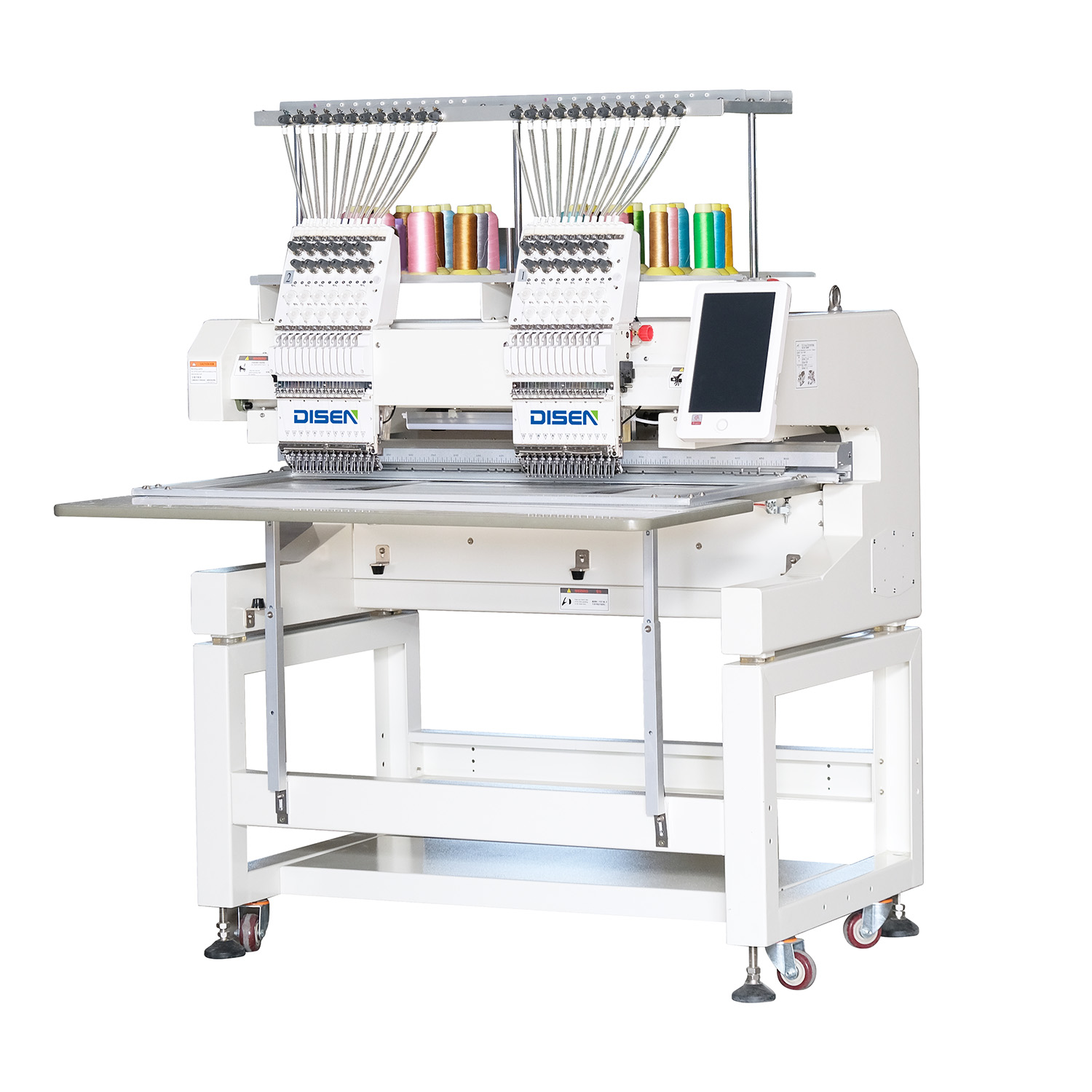
These massive rigs are built for continuous daily operation. They handle bulk uniform orders and complex multi-color designs effortlessly. When scaling operations, commercial Embroidery Machines provide the necessary durability and speed. Tubular free-arm configurations allow you to embroider hats and bags without obstruction. They feature multi-needle heads, heavy-duty chassis, and advanced network capabilities. You can link multiple heads together via a local area network for massive scaling. A single operator can manage four or more machines simultaneously. The heavy cast-iron base absorbs all vibration, ensuring perfect registration even at maximum speed. These units run eight to twelve hours a day without overheating.
Machine Tier | Primary Use Case | Needle Setup | Build Quality | Average Speed (SPM) | Cap Capability |
|---|---|---|---|---|---|
Entry-Level Domestic | Hobby, Occasional Gifts | Single-Needle | Mostly Plastic, Flatbed | 400 - 600 | None (Flatbed only) |
Prosumer / Cottage | Small Home Business | Single or Multi-Needle | Hybrid Metal/Plastic | 600 - 800 | Limited (Pseudo free-arm) |
Industrial Commercial | High-Volume Production | Multi-Needle (6 to 15+) | Cast Iron, Tubular Free-Arm | 1,000 - 1,200 | Full 270-Degree Cap Frames |
Embroidery software plays an important role in design quality and production efficiency. Basic software only supports simple editing, while professional digitizing software converts artwork into accurate stitch files. Advanced tools allow control over stitch density, underlay, and pull compensation to reduce thread breaks and fabric distortion. Choosing suitable software helps improve embroidery quality, reduce design adjustment time, and avoid long-term dependence on external digitizing services.
Required accessories scale heavily with your machine tier. You will need specialized magnetic hoops, heavy-duty cap drivers, various stabilizers, and bulk thread cones. Magnetic hoops alone represent a significant secondary investment, but they save immense time during the hooping process. You truly get what you pay for with thread. Running cheap thread through a premium machine at 1,200 SPM causes constant thread breaks. This completely negates the machine's speed advantage. You must invest in high-tensile polyester thread, titanium-coated needles, and premium cutaway stabilizers to achieve professional results.
Stabilizers: Cutaway stabilizers provide permanent support for stretchy knits, while tearaway backings work best for stable woven fabrics. Using the wrong backing causes puckering.
Needles: Ballpoint needles push knit fibers apart to prevent holes, whereas sharp needles pierce heavy canvas and denim cleanly. Titanium coating extends needle life significantly.
Bobbins: Pre-wound magnetic bobbins offer consistent tension from the first stitch to the last, reducing the need for manual tension adjustments mid-run.
Hooping Stations: A dedicated hooping board ensures consistent logo placement across hundreds of garments, eliminating guesswork and measuring errors.
Skimping on backing material leads to distorted logos after the first wash. High-quality consumables keep the machine running smoothly and reduce operator frustration.
Automation helps reduce labor costs and improve production consistency. Multi-needle machines can switch colors automatically, reduce manual thread changes, and allow operators to prepare the next job while the machine is running. They also reduce errors during production and shorten setup time, helping businesses complete more orders in each shift.
The right embroidery machine depends on the products you plan to make. Flatbed machines work well for shirts and simple fabrics, while tubular free-arm machines are better for hats, bags, sleeves, and thicker materials. Commercial machines provide stronger motors and more clearance, allowing them to handle a wider range of products.
Reliable supplier support is important for long-term production stability. Authorized suppliers can provide installation, operator training, spare parts, and technical service when problems occur. Fast support helps reduce downtime and ensures the machine continues operating efficiently.
Equipment lifespan and resale value should be considered when choosing an embroidery machine. High-quality commercial machines usually maintain their value better because of stronger structures and durable components. With proper maintenance, they can provide stable performance for many years and reduce long-term replacement costs.
Audit your daily production volume to determine if manual thread changes are currently bottlenecking your output.
Test your most common garment types on a free-arm machine to evaluate the absolute need for tubular clearance.
Calculate your local labor rates against the time saved by automated color switching and jump-stitch trimming.
Consult with a local authorized dealer to assess available training programs and emergency repair timelines.
A: Multi-needle machines feature complex internal mechanics, robust motors, and automated color-switching capabilities. These components require higher manufacturing tolerances and heavier materials to sustain rapid, continuous stitching without manual intervention. The automation directly replaces human labor, driving up the initial hardware value.
A: Using low-quality thread on high-speed commercial machines leads to frequent thread breaks and tension issues. This downtime completely negates the speed advantages of a premium machine. Always use high-quality, high-tensile thread for optimal efficiency and stitch quality.
A: You do not strictly need to buy full digitizing software immediately. Many businesses outsource their digitizing to experienced freelancers. This allows you to focus on production while avoiding the steep learning curve and high initial software cost.
A: Flatbed machines require the fabric to lay completely flat, making them suitable for shirts and blankets. Free-arm machines feature a tubular design that allows you to slide hats, bags, and sleeves over the arm for unobstructed stitching.
A: With proper maintenance, regular oiling, and timely servicing, commercial units can easily last over a decade. Their cast-iron frames and metal internal components withstand continuous daily operation far better than plastic domestic models.
A: A larger hoop size provides more versatility for jacket backs and large designs. However, using a massive hoop for a small left-chest logo can cause fabric shifting. You should match the hoop size closely to the specific design dimensions.
A: Running a commercial machine in an apartment is highly challenging. They generate significant noise and vibration that easily travels through floors. They also require substantial physical space and often need dedicated electrical circuits to operate safely.