Views: 0 Author: Site Editor Publish Time: 2026-09-21 Origin: Site
Purchasing commercial embroidery equipment requires significant capital expenditure, making the risk of buyer's remorse exceptionally high for new entrants. First-time buyers frequently evaluate equipment based on superficial marketing metrics, like theoretical maximum speeds, rather than operational realities. This oversight leads to severe production bottlenecks, incompatible software issues, and compromised returns on investment. Relying on vanity metrics rather than practical performance data sets a production floor up for failure.
To transition from a hobbyist mindset to a commercial production framework, buyers must evaluate equipment through a strict lens of scalability, long-term operational viability, and workflow integration. Understanding the physical limitations of the hardware and recognizing the ongoing requirements for maintenance and software compatibility will protect your initial investment. You must look beyond the spec sheet to understand how the machine functions during a heavy production shift.
Capacity Over Cost: Prioritizing upfront sticker price over multi-needle or multi-head scalability often results in severe production bottlenecks within the first year of operation.
Software is the Engine: The physical machine is only as effective as its digitizing software; proprietary file limitations can cripple a shop's ability to accept diverse client artwork.
Throughput Trumps Speed: Maximum Stitches Per Minute (SPM) is a vanity metric; actual profitability depends on minimizing downtime from thread breaks, hoop changes, and tension adjustments.
Support Dictates Uptime: Access to certified technicians and localized parts distribution is an evaluation dimension that outweighs minor feature advantages.
Long-Term Value is King: Factoring in financing options, depreciation, aftermarket accessory compatibility, and hidden installation logistics is essential for protecting cash flow.
Table of Contents
Purchasing equipment that barely meets your current order volume guarantees a problem. You will need a premature upgrade when the business scales. Many new operators buy machines based on the orders they have today. They fail to account for the rapid growth that follows successful fulfillment. This forces the business into a corner. You either turn away bulk orders or overwork a machine not designed for continuous output.
Evaluating the break-even point for single-head machines versus multi-head configurations requires looking at labor hours. Many new shops start with a single-head unit to minimize initial risk. They quickly realize the labor cost of monitoring one garment at a time destroys their profit margins. Operating a four-head machine takes roughly the same operator time as a single-head unit. The break-even point shifts dramatically when you can output four left-chest logos simultaneously.
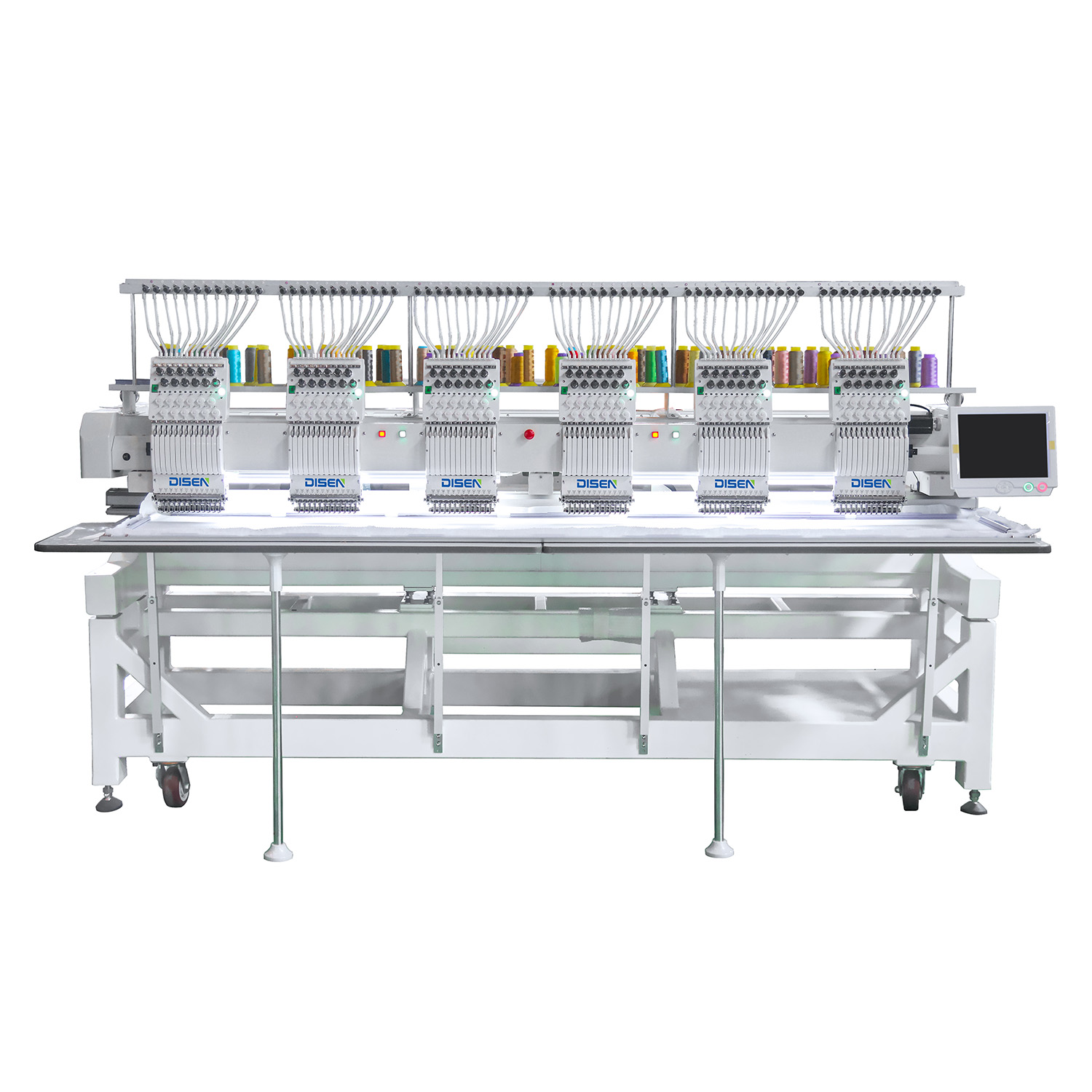
When evaluating commercial Embroidery Machines, you must factor in operator idle time. Paying an employee to watch a single needle finish a 10,000-stitch design is highly inefficient. Multi-head configurations multiply your output without multiplying your labor costs. If you receive an order for 144 hats, a single-head machine will take days of continuous running. A four-head machine cuts that production time by seventy-five percent, freeing up the operator to stage the next job.
Machines with one to six needles fail in high-volume commercial environments. They require constant manual intervention. If you run a corporate logo with seven colors on a six-needle machine, the operator must manually re-thread the machine mid-run. This introduces massive downtime. It also increases the risk of threading errors and tension inconsistencies.
You need 12- to 15-needle setups for commercial viability. This eliminates manual thread changes during complex runs. It allows you to keep standard colors loaded at all times. You can transition from a red-and-black logo to a blue-and-gold logo without touching a single spool of thread. Keeping standard colors like white, black, navy, and red permanently loaded on a 15-needle machine streamlines daily operations.
Needle Count | Best Application | Operational Limitations |
|---|---|---|
1 to 6 Needles | Hobbyists, simple monograms | Requires frequent manual re-threading for standard logos. High operator downtime. |
10 Needles | Entry-level commercial | Handles most standard logos but lacks capacity for holding multiple base colors permanently. |
15 Needles | High-volume production | Allows permanent loading of core colors. Zero downtime for thread swapping on complex designs. |
First-time buyers often fail to account for the physical realities of commercial equipment. These machines are massive, heavy pieces of cast iron and steel. You must evaluate doorway clearances before scheduling delivery. A multi-head machine will not fit through a standard residential door frame. You need roll-up bay doors or double commercial doors for installation.
You must also calculate the floor load capacity. Commercial units create significant downward force and vibration. Placing them on a suspended wooden floor can cause structural issues and registration errors. Concrete floors are mandatory for multi-head units. Furthermore, you must plan spatial requirements for safe operator movement. You need dedicated square footage for garment staging, hooping stations, and backing storage. Cramping the machine against a wall prevents proper maintenance access to the rear tensioners and main motor.
The physical machine is merely an output device. Software dictates design execution and production efficiency. Treating digitizing software as an afterthought is a catastrophic error. The best hardware cannot fix poorly plotted stitches. Your software ecosystem determines how fast you can process client artwork. It dictates the quality of the final embroidered garment. Evaluating the software is just as important as evaluating the mechanical components.
Purchasing equipment locked into proprietary software ecosystems carries massive risk. Some manufacturers force you to use their specific file formats. This requires expensive, tiered software upgrades just to access basic editing features. It prevents you from easily sharing files with outside digitizers. You must evaluate machine compatibility with industry-standard file types.
The machine must read .DST, .EXP, and .PES formats natively. Open-source compatibility allows you to source digitized files from any professional digitizer worldwide. It prevents vendor lock-in. It ensures your design library remains accessible even if you switch machine brands in the future. The .DST format is the universal language of embroidery, containing raw X and Y coordinate data that any commercial machine can read.
You must assess the learning curve of bundled digitizing software. Complex software requires hundreds of hours to master. If the interface is unintuitive, your production will stall. Evaluating network connectivity is equally important. Relying on USB drives to transfer designs from the computer to the machine is outdated. It introduces the risk of file corruption and lost drives.
You need reliable Wi-Fi or LAN connectivity. Seamless design pushing from the design station directly to the production floor saves countless hours. It ensures the operator always pulls the most recent, approved version of the design file. Advanced shops use barcode scanners at the machine console to pull the exact design file from the local server, eliminating operator file-selection errors.
Software sales pitches often highlight one-click auto-digitizing features. Relying on these tools leads to disastrous results. Auto-digitizing algorithms do not understand fabric stretch. They do not comprehend push-and-pull compensation. They simply convert color blocks into flat stitches. This leads to poor stitch quality, severe fabric puckering, and constant thread breaks.
Professional digitizing requires strategic underlay stitching and pathing. You must invest in professional digitizing training. If you cannot invest the time, you must budget for outsourced digitizing services during the startup phase. Paying a professional guarantees smooth machine operation and high-quality client deliverables. A well-digitized file runs faster, breaks fewer needles, and uses less thread than an auto-digitized file.
Understanding the physical constraints of the machine's architecture is mandatory. These constraints directly limit your product offerings. Buyers often look at the size of the included accessories and make incorrect assumptions about capabilities. You must understand the mechanical boundaries of the pantograph system. Failing to do so will result in turning away lucrative jobs because the garments simply will not fit on the machine.
There is a critical difference between the physical size of the hoop and the machine's actual pantograph movement limits. The pantograph is the mechanical arm that moves the hoop under the needle. A manufacturer might include a 15-inch hoop. However, the pantograph might only have a 14-inch maximum travel distance. This is the true sewing field.
Pantograph restrictions prevent full-back jacket designs even if the garment fits perfectly in the hoop. If the arm hits its physical limit, the machine stops. You must verify the exact X and Y axis travel limits before assuming you can embroider large varsity jackets or duffel bags. Always measure the distance from the needle to the back of the machine neck to determine the true clearance for bulky items.
Embroidering flat garments is easy. Specialty items require specific mechanical clearances. You must evaluate the machine's tubular arm size. A bulky tubular arm prevents you from embroidering inside tight spaces like tote bags, sleeves, or small pockets. You need a narrow cylinder arm for these applications.
Assessing the quality of the cap driver system is also a major factor. Cap drivers are a common failure point in budget-tier equipment. The driver must hold the structured crown of a hat rigidly in place. If the cap driver lacks stability, the design will shift during production. This causes ruined hats and wasted inventory. Look for 270-degree cap drivers that allow you to embroider from ear to ear in a single continuous run.
Being restricted to Original Equipment Manufacturer (OEM) hoops creates a massive operational bottleneck. OEM hoops are often traditional two-piece plastic rings. They require significant hand strength and time to secure properly. You must ensure the machine's architecture supports industry-standard aftermarket upgrades.
Magnetic hoops drastically reduce hooping time. They prevent hoop burn on delicate fabrics. Specialized clamping systems allow you to hold thick items like dog collars or heavy canvas bags. If your machine cannot accept these aftermarket tools, your daily production volume will suffer heavily. Upgrading to magnetic hoops is often the first modification a commercial shop makes to increase daily output.
Shifting your evaluation from the initial purchase price to long-term operational costs is necessary for survival. The sticker price is only a fraction of the capital required to run a successful shop. Focusing exclusively on finding the cheapest machine guarantees unexpected financial strain. You must account for the hidden costs of operation, maintenance, and infrastructure. Budgeting accurately for these variables protects your cash flow during the critical first year of business.
The machine requires a massive initial inventory of consumables before you can stitch a single order. You must calculate the cost of backing materials, including cutaway, tearaway, and water-soluble stabilizers. You need a full spectrum of specialty threads, pre-wound bobbins, and various needle types. These supplies add up quickly.
Furthermore, you must factor in the cost of mandatory operator training. Skipping formal onboarding leads to early mechanical damage. Untrained operators will crash the needle into the hoop. They will improperly oil the rotary hook. Paying for professional training prevents catastrophic machine failures and expensive replacement parts. Proper maintenance training ensures the operator knows how to adjust bobbin tension and clean the thread path.
You must read the fine print of any equipment warranty. Many budget manufacturers advertise long warranties that only cover parts. They exclude the cost of labor. They also exclude wear and tear components like needles, bobbin cases, and rotary hooks. The geographic risk of technician availability is a massive factor.
You must evaluate the proximity of certified technicians. If the nearest technician is three states away, you will pay exorbitant travel fees for emergency repairs. You will also suffer days of downtime while waiting for them to arrive. Localized support dictates your uptime. A machine that sits broken for a week costs you more in lost revenue than the initial savings of buying a budget brand.
Depleting your cash reserves to buy a machine outright is often a mistake. Equipment financing and lease-to-own options preserve startup capital. They allow you to keep cash on hand for marketing, inventory, and payroll. Financing also provides significant tax advantages through equipment depreciation deductions.
You must also evaluate long-term resale value. Premium, name-brand Embroidery Machines retain significant equity. If you need to upgrade or exit the business, you can recoup a large portion of your investment. Unbranded or budget imports depreciate instantly. They hold almost zero resale value on the secondary market. Buying a recognized brand ensures you have an asset you can liquidate or trade in later.
Falling for marketing claims that do not translate to real-world production environments is a common pitfall. Maximum Stitches Per Minute (SPM) is a theoretical metric. It assumes perfect conditions, zero thread breaks, and simple stitch patterns. Actual throughput is measured by completed garments per hour. Chasing maximum speed often leads to mechanical instability and ruined products. Profitability depends on consistent, uninterrupted operation, not short bursts of high-speed stitching.
Running a machine at 1,200 SPM often causes severe thread friction. The thread heats up, frays, and eventually snaps. A single thread break stops the entire machine. The operator must re-thread the needle, back up the design, and restart. This downtime destroys efficiency.
You will achieve more daily output by running consistently at 800 SPM with zero thread breaks. Evaluating automatic thread tensioning systems versus manual tension knobs is a major step for operational reliability. Automatic systems adjust tension on the fly based on stitch length. Manual knobs require constant tweaking by an experienced operator to prevent looping and bird-nesting. Polyester thread handles higher speeds better than rayon, but both will snap if the tension discs are too tight.
The machine's computer automatically slows down the pantograph for complex movements. Long satin stitches, dense fill areas, and heavy fabric types force the machine to reduce speed to maintain accuracy. Therefore, "max speed" claims are irrelevant for most commercial jobs. You must calculate true return on investment based on average completed garments per hour.
This calculation must factor in hoop-loading times, color-change times, and thread trimming sequences. A machine might hit 1,000 SPM on a simple running stitch, but it will drop to 400 SPM when executing a wide satin border. Planning your production schedule around an average of 600 to 700 SPM provides a much more accurate picture of your daily capacity.
Production Metric | Theoretical Max Speed (1,200 SPM) | Optimized Production Speed (800 SPM) |
|---|---|---|
Thread Breaks per Hour | High (4-6 breaks) | Low (0-1 breaks) |
Downtime per Break | 2-3 minutes | 2-3 minutes |
Registration Quality | Poor (Vibration shifting) | Excellent (Stable pantograph) |
Actual Garments per Hour | Lower (Due to constant stops) | Higher (Continuous running) |
Operating at maximum SPM exponentially increases machine vibration. This vibration transfers through the stand and into the floor. It causes the pantograph to sway slightly. This leads to registration issues, where the outlines do not properly align with the color fills. High-speed operation also accelerates wear on moving parts, requiring more frequent lubrication and part replacements.
Furthermore, you must evaluate the noise output. High-speed stitching generates significant decibel levels. This is a major factor for businesses operating in retail storefronts or residential spaces. A quieter, slightly slower machine provides a much better working environment. Heavy cast-iron frames absorb this vibration better than lightweight aluminum frames, keeping the needle strikes accurate even during long shifts.
Map out your projected order volume for the next 24 months to determine if a multi-head configuration is necessary from day one.
Test your preferred digitizing software with a complex vector file to ensure it exports clean .DST files without relying on auto-digitizing.
Measure your physical workspace, including doorway clearances and concrete floor load capacities, to guarantee safe installation.
Verify the geographic location of the nearest certified technician to minimize future downtime during emergency repairs.
A: You need 12 to 15 needles for commercial output. This eliminates manual thread changes during complex logo runs. It allows you to keep standard colors loaded permanently, drastically reducing downtime between different client orders.
A: Incorrect thread tension and poor digitizing cause most breaks. Running the machine at maximum speed also contributes significantly by generating excess friction. Proper maintenance and optimized running speeds prevent most thread snapping issues.
A: Not always. You must verify that the machine's architecture supports industry-standard aftermarket accessories. Some budget brands restrict you to their proprietary plastic hoops. Ensure compatibility with magnetic clamping systems before purchasing.
A: No. Outsourcing to professional digitizers is highly recommended during the startup phase. This ensures high-quality output while you focus on mastering the physical machine operation and building your client base.
A: The .DST format is the universal industry standard. It contains only stitch commands and X/Y coordinates. It works on nearly all commercial equipment, ensuring you are never locked into a single software vendor.
A: Beyond the physical footprint of the heavy cast-iron frame, you need clearance for operator movement. You must account for garment staging areas, hooping stations, and the full extension of the pantograph arms during operation.