Views: 0 Author: Site Editor Publish Time: 2026-10-13 Origin: Site
Direct-to-film technology has rapidly taken over the custom apparel industry. Shops love the versatility it brings across different fabric types without the messy pretreatment steps required by older digital methods. You can print full-color graphics on polyester, cotton, and complex blends with ease. However, many shop owners misjudge the true financial commitment. They look at the sticker price of entry-level hardware and stop there. This leads to severe undercapitalization. Hidden maintenance routines, consumable waste, strict environmental control requirements, and freight logistics quickly eat into profit margins. You need a clear picture of these secondary expenses to keep your production floor running smoothly. This breakdown covers the real financial realities of the process. We will look at capital expenditures, variable consumable costs, labor requirements, and spoilage rates so you can make a data-backed purchasing decision.
Total equipment and operational expenses exceed hardware: Commercial setups require significant secondary investments in ventilation, climate control, IT infrastructure, and finishing equipment.
Consumables dictate long-term margins: White ink consumption, daily maintenance routines, and replacement fume extractor filters are the primary drivers of recurring operational costs.
Environmental control is non-negotiable: Failing to invest in proper humidity and temperature regulation leads to premature printhead failure, drastically inflating costs.
Volume dictates viability: DTF printing offers high margins on short-to-medium runs, but calculating exact cost-per-square-foot—including a realistic defect rate—is critical for competitive pricing and break-even analysis.
Table of Contents
Defining the baseline infrastructure required to produce retail-ready transfers is the first step in building a sustainable production model. You must balance the capability of the equipment with the physical limitations of your workspace. Cutting corners on initial infrastructure often leads to production bottlenecks, compromised safety, and frequent downtime.
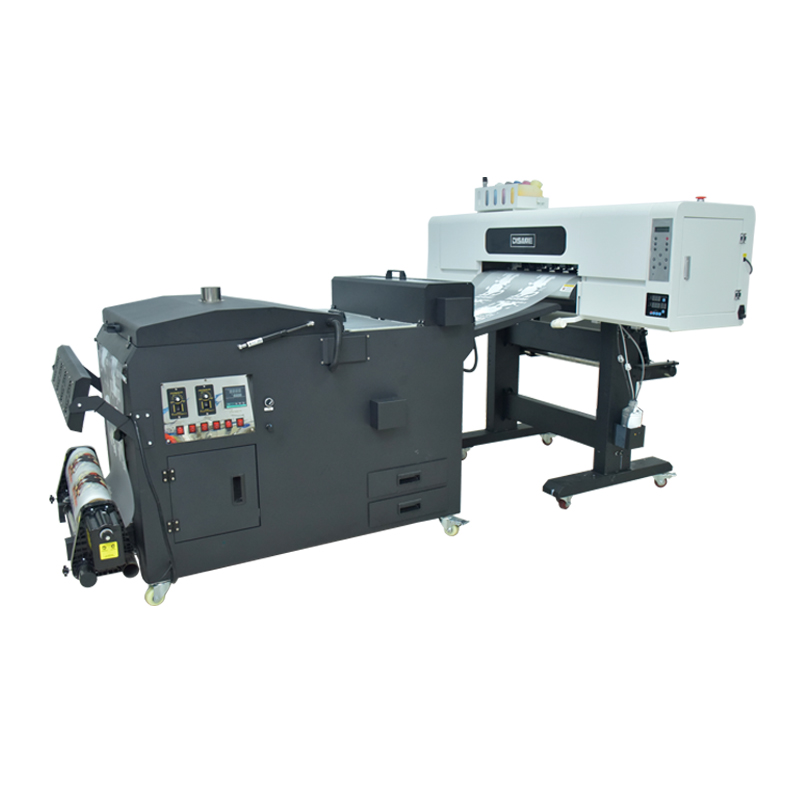
The market is divided into two distinct categories: modified desktop conversions and purpose-built commercial roll-to-roll systems. Desktop conversions carry a lower initial acquisition barrier but present high operational risks. These units are typically retrofitted paper printers lacking the robust ink delivery systems needed to handle heavy textile inks. They often fail under continuous use. Commercial roll-to-roll machines feature dual or quad printhead configurations designed for continuous output.
Printhead configuration directly impacts both speed and replacement frequency. Industrial printheads, such as the Epson I3200, are engineered for high-frequency firing. They handle the heavy viscosity of textile inks far better than entry-level alternatives like the XP600. Machines equipped with industrial heads require a larger initial capital outlay but offer faster rasterization speeds and longer lifespans under heavy production loads.
Software licensing is another upfront consideration. Professional RIP software is mandatory for accurate color profiling, white underbase generation, and gang sheet layout. Industry-standard programs require either a one-time perpetual license or a recurring subscription. Buyers must also budget for hidden acquisition logistics. Freight shipping, heavy-duty crating fees, liftgate delivery surcharges, and mandatory on-site professional installation and training add significantly to the final invoice.
DTF equipment financing allows businesses to choose between outright purchases and leasing options. Leasing can preserve working capital and spread equipment costs over time, while purchasing provides full ownership. Eligible tax deductions or incentives may further reduce investment costs, depending on local regulations.
DTF curing equipment ensures adhesive powder melts evenly and bonds correctly with printed ink. Manual curing ovens suit small-scale production, while automated powder shaker and dryer systems improve consistency, reduce labor, and increase output. Equipment selection should consider production volume, electrical requirements, and available workspace.
Commercial heat presses provide consistent temperature and pressure for reliable DTF transfers. Pneumatic and auto-open models can improve efficiency during high-volume production. Proper fume extraction systems, including suitable particulate and activated carbon filtration, help control emissions from adhesive powder curing and protect the working environment.
Stable temperature and humidity are essential for consistent DTF printing performance. Many systems operate best around 40–60% relative humidity and 70–80°F (21–27°C), although manufacturer recommendations vary. Proper HVAC, humidification, and ventilation help prevent ink drying, nozzle clogging, and production interruptions.
DTF ink consumption depends on artwork size, color coverage, and white underbase requirements. White ink often represents a significant operating expense because it provides opacity on dark fabrics and requires regular circulation. Monitoring ink usage, shelf life, and maintenance consumption helps control printing costs.
DTF transfer film is available in sheets and rolls, with hot-peel and cold-peel options. Sheets suit small orders and desktop production, while rolls generally provide better material efficiency for larger operations. High-quality film coatings help improve ink transfer, powder adhesion, and overall printing consistency.
TPU adhesive powder bonds DTF designs to fabrics during heat pressing. Fine powders are commonly used for detailed prints and lightweight garments, while coarser grades may suit heavier materials. Powder selection should consider fabric compatibility, adhesion strength, print flexibility, and material waste.
DTF printing costs include ink, transfer film, adhesive powder, labor, maintenance, and production waste. Calculating material consumption per square foot helps businesses estimate job expenses and set profitable prices. Including spoilage from printing defects, transfer failures, and alignment errors provides a more accurate view of operating costs.
Beyond capital equipment and raw materials, ongoing labor, IT infrastructure, and maintenance realities dictate true profitability. Ignoring these factors leads to skewed financial projections and unexpected cash flow shortages.
DTF printer maintenance includes daily nozzle checks, printhead cleaning, white ink circulation, and inspection of wiper blades and capping stations. These procedures consume ink and cleaning supplies, increasing operating costs. Regular replacement of ventilation filters and proper equipment cleaning help prevent clogging, maintain print quality, and reduce unexpected downtime.
Professional RIP software requires sufficient computer processing power and memory to handle high-resolution artwork and large gang sheets. Reliable workstations, adequate storage capacity, and secure file backups help improve production efficiency, prevent processing delays, and support repeat customer orders.
DTF labor costs include artwork preparation, gang sheet layout, printer operation, equipment maintenance, and heat transfer application. Although printing can be automated, garment positioning, pressing, peeling, and packaging still require manual work. Efficient workflows and operator training help reduce labor costs and improve productivity.
DTF printheads require periodic replacement due to wear, ink buildup, or component failure. Additional maintenance may involve ink dampers, capping stations, and wiper assemblies. Businesses should account for replacement parts, technician services, and production downtime when calculating long-term operating expenses.
DTF pricing strategies should account for material consumption, labor, equipment maintenance, and desired profit margins. Selling gang sheets or ready-to-press transfers typically focuses on wholesale volume, while finished custom garments offer higher selling prices but require additional labor and inventory management.
DTF printing is particularly suitable for small-to-medium orders because it supports multicolor designs without traditional screen preparation. Break-even calculations should compare equipment investment, monthly operating costs, production volume, and profit per unit. Consistent order demand helps improve equipment utilization and shorten the investment payback period.
DTF, DTG, and screen printing have different cost advantages depending on garment materials, design complexity, and order volume. DTF provides flexible fabric compatibility and efficient small-batch production, while DTG offers direct garment printing with a soft finish on suitable fabrics. Screen printing is generally more economical for large-volume orders with simple, limited-color designs.
A: Under optimal environmental conditions and strict daily maintenance, industrial printheads typically last between 12 and 18 months. Heavy production volumes, poor humidity control, or skipping daily cleaning routines will drastically reduce this lifespan, requiring premature replacement.
A: Yes. Professional RIP software requires significant processing power to render high-resolution graphics and generate white underbases quickly. A dedicated workstation with a multi-core processor, ample RAM, and a solid-state drive prevents software crashes and production bottlenecks.
A: While standard manual clamshell presses can work, commercial-grade pneumatic or auto-open presses are highly recommended. Consistent, heavy pressure and perfectly even heat distribution across the entire platen are required to ensure the adhesive binds permanently to the garment fibers.
A: Textile inks are highly sensitive to the environment. If humidity drops below 40%, the ink can dry inside the microscopic nozzles of the printhead, causing permanent clogs. High humidity can cause the adhesive powder to clump and stick to unprinted areas of the film.
A: Filter replacement frequency depends entirely on production volume. In a high-volume commercial setting, pre-filters may need weekly replacement. Heavy HEPA and activated carbon filters typically require replacement every three to six months to maintain proper airflow and capture off-gassing.
A: TPU powder does not strictly expire like liquid ink, but it is highly hygroscopic, meaning it absorbs moisture from the air. If left in a humid environment unsealed, it will clump, leading to uneven application and poor adhesion on the final garment. Always store powder in airtight containers.