Views: 0 Author: Site Editor Publish Time: 2026-10-13 Origin: Site
Fulfilling small-batch and one-off custom apparel orders requires a delicate balance between high-quality output and strict margin control. Shop owners constantly fight against dead stock and equipment downtime. Investing in the wrong printing technology for low-volume orders leads to wasted inventory, restrictive product catalogs, or prohibitive equipment maintenance costs. You cannot afford machinery that sits idle, clogs up over the weekend, or forces you to turn away profitable custom requests due to fabric limitations. We see shops make this mistake constantly, buying gear that does not match their actual daily production reality. To determine whether DTF vs sublimation is the superior choice for your small-order fulfillment, this guide breaks down the technical workflows, material constraints, unit economics, and implementation risks of both methods.
Material Flexibility: DTF printing allows application on nearly any fabric (cotton, blends, dark colors), whereas sublimation is strictly limited to light-colored, high-polyester substrates.
Soft Goods vs. Hard Goods: Sublimation dominates the rigid promotional product market (mugs, tumblers, metals), while DTF is strictly designed for flexible textiles and apparel.
Durability and Feel: Sublimation offers unmatched longevity and a "zero-hand" feel by embedding ink into the fabric fibers. DTF sits on top of the fabric, offering vibrant opacity but leaving a noticeable surface texture.
Workflow for Small Orders: Sublimation provides a simpler print-and-press workflow. DTF requires powdering and curing steps, though small businesses can bypass equipment maintenance entirely by purchasing pre-printed DTF transfers.
Cost Efficiency: Desktop sublimation generally requires lower upfront equipment costs for micro-businesses, but DTF offers a higher total addressable market by removing garment limitations.
Table of Contents
DTF (Direct-to-Film) and sublimation printing are digital printing methods suitable for custom apparel, personalized products, and small-batch production. However, they use different transfer processes and offer distinct material compatibility.
Sublimation printing uses heat to transfer specialized dyes from transfer paper into polyester fibers or polymer-coated surfaces. The dye becomes part of the material, producing vibrant, durable prints without a noticeable surface layer.
Process: Design Printing → Heat Transfer → Dye Penetration → Cooling
DTF printing transfers pigment ink designs from PET film onto fabric using hot-melt adhesive powder and a heat press. The printed layer bonds to the fabric surface, making DTF suitable for cotton, polyester, blended fabrics, and both light and dark garments.
Process: Film Printing → Powder Application → Curing → Heat Pressing → Film Peeling
Both printing methods support print-on-demand and low-volume customization without the screen preparation required for traditional screen printing. Businesses can produce individual designs, test new products, and fulfill small orders efficiently.
DTF offers greater fabric flexibility, while sublimation provides excellent durability and a soft print feel on compatible materials.
Sublimation printing works best on 100% polyester fabrics and specially polymer-coated products, such as mugs, tumblers, and promotional items. Polyester blends can also be used, but lower polyester content generally produces less vibrant results. Because sublimation inks are translucent, white or light-colored substrates are essential for accurate color reproduction. These limitations make sublimation ideal for sportswear, performance apparel, and coated promotional products, but less suitable for dark cotton garments.
Feature | Sublimation | DTF Printing |
|---|---|---|
Fabric Types | Polyester (65%+), Polymer-coated hard goods | Cotton, Polyester, Blends, Nylon, Leather, Canvas |
Garment Colors | White and light colors only | All colors, including black and dark shades |
Ink Type | Translucent disperse dye | Opaque water-based pigment with white underbase |
Surface Feel | Zero-hand (embedded in fibers) | Slight texture (sits on top of fabric) |
Durability | Permanent (outlasts the garment) | 50+ washes (with proper care and pressing) |
DTF printing offers unmatched versatility across diverse material types. The adhesive powder bonds securely with 100% cotton garments. It works flawlessly on 50/50 blends, triblends, and heavy canvas. You can even apply these transfers to nylon jackets and treated leather. The mechanical bond does not rely on polymer pores opening. The melted TPU powder simply grips the surface fibers of the substrate. This allows you to decorate nearly any flexible textile available in your supplier's catalog.
The white ink underbase serves as the core component for DTF success. This opaque layer blocks the garment color from showing through the design. It allows for brilliant, full-color opacity on black and dark garments. The white ink acts as a primer for the CMYK colors. It ensures that a yellow logo remains bright yellow on a black hoodie. You do not have to worry about dye migration from the fabric altering your colors, provided you use a quality anti-migration powder or blockout base. The underbase provides a stable, neutral canvas for the graphic.
This universal application transforms how small businesses operate daily. You can say "yes" to a much wider variety of client requests. You avoid holding specialized blank inventory in your shop. You can print the exact same transfer for a cotton t-shirt and a polyester bag. This simplifies your supply chain and reduces overhead waste. You can confidently target corporate clients, fashion brands, and local sports teams simultaneously without changing your printing hardware.
Sublimation printing delivers a soft, breathable, zero-hand feel because the dye bonds with polyester fibers. This makes it ideal for sportswear and performance apparel. DTF printing creates a thin, flexible layer on the fabric surface, offering good stretchability but a more noticeable texture, especially on large designs.
Sublimation printing produces vibrant photographs and smooth gradients on white or light-colored polyester, but fabric color and heat settings can affect color accuracy. DTF printing uses a white ink underbase to create sharp, opaque designs on both light and dark fabrics, making it suitable for detailed graphics and consistent brand colors.
Sublimation prints offer excellent wash durability because the dye becomes part of the fabric, eliminating peeling and cracking. DTF transfers also provide good durability when properly cured and heat-pressed, although repeated washing and high temperatures may eventually cause cracking or peeling. Washing inside out, using mild detergent, and avoiding direct ironing help extend print life.
The sublimation workflow is highly streamlined and efficient for small batches. You send your design to the printer using standard color profiles. The printer outputs the image onto specialized transfer paper. You trim the paper and tape it securely to your substrate using heat-resistant tape. You place the item in a heat press at the required temperature and pressure. After the designated time, you remove the item and peel the paper away. The product is immediately finished and ready for the customer.
This process lacks messy consumables and complex chemical reactions. You do not deal with adhesive powders or wet ink curing stations. The printers generally require less aggressive daily maintenance than pigment-based systems. This simplicity makes one-off printing incredibly easy and profitable. You can print a single custom mug or shirt in minutes. The learning curve for new employees remains very low. You can train staff to operate a sublimation station quickly and safely.
Substrate | Temperature | Time | Pressure |
|---|---|---|---|
Polyester Apparel | 385°F - 400°F | 45 - 60 seconds | Medium |
Ceramic Mugs | 380°F - 400°F | 180 - 240 seconds | Heavy |
Metal Tumblers | 375°F - 390°F | 60 - 75 seconds | Medium-Heavy |
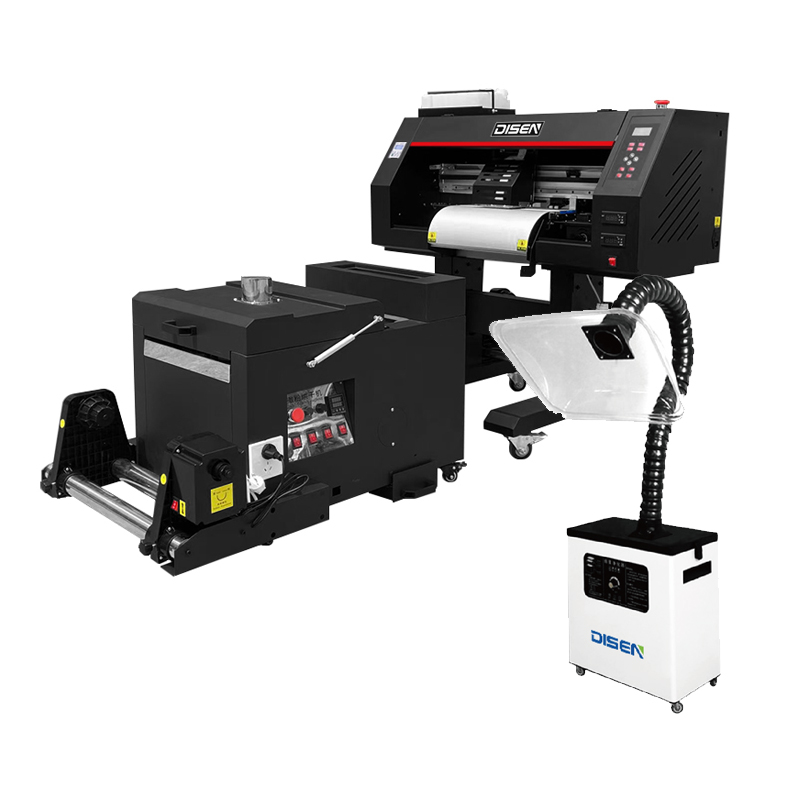
DTF (Direct-to-Film) printing involves printing designs onto PET film, applying hot-melt adhesive powder, curing the film, and heat-pressing the design onto garments. This process requires suitable ventilation, controlled temperature and humidity, and regular printer maintenance. Proper powder handling and curing help ensure consistent transfer quality.
Outsourcing DTF transfers is a practical solution for small businesses with limited production volumes. By ordering ready-to-press gang sheets from suppliers, shops can avoid printer maintenance, powder handling, and high equipment investments. This approach simplifies production and allows businesses to scale custom apparel orders more flexibly.
Sublimation printing generally requires lower initial investment, making it suitable for small businesses and beginners. DTF printing involves higher equipment costs, including specialized printers, curing systems, and ventilation equipment. Businesses should evaluate production volume, maintenance needs, and available workspace before investing.
Sublimation printing uses specialized ink and transfer paper, typically offering lower consumable costs. DTF printing requires pigment ink, PET film, and adhesive powder, increasing material expenses. However, DTF supports a wider range of fabrics, including cotton and dark garments. Actual cost per print depends on materials, order volume, and maintenance requirements.
Return on investment (ROI) depends on equipment costs, production frequency, and customer demand. Sublimation may be more economical for occasional orders involving polyester products, while DTF offers broader customization opportunities. For low-volume businesses, outsourcing DTF transfers can reduce financial risk and eliminate the need for expensive printing equipment.
To maximize your efficiency and profitability with small orders, take these immediate actions:
Audit your recent customer requests to determine if cotton or dark fabrics dominate your demand.
Test pre-printed DTF gang sheets from a commercial supplier before investing in dedicated machinery.
Calculate your realistic weekly print volume to see if it justifies daily printer maintenance routines.
Upgrade your workspace ventilation systems immediately if you plan to adopt powder-based workflows.
Purchase specialized heat-resistant tape and foam pillows to eliminate ghosting in your current press setup.
A: No. The technologies use entirely different chemical processes. Sublimation requires disperse dyes that turn into gas. DTF requires water-based pigment inks that bind mechanically with adhesive powder. Mixing inks will destroy the printheads and ruin the equipment.
A: Stiff prints usually result from applying too much adhesive powder or using low-quality film. Ensure you shake off all excess powder before curing. Switching to a premium hot-peel film and a finer-grade TPU powder will significantly improve the flexibility and hand feel.
A: No. Sublimation ink is translucent and will not show up on dark fabrics. Furthermore, the gas cannot bond with natural cotton fibers. It will wash out immediately. You must use light-colored garments with at least 65% polyester.
A: Properly cured DTF transfers can last up to 12 months in storage. You must keep them in a dry, climate-controlled environment away from direct sunlight. High humidity can cause the cured adhesive to degrade, leading to poor bonding during pressing.
A: You need a commercial-grade heat press that provides even, consistent temperature and heavy pressure. Cheap clamshell presses often have cold spots that ruin both sublimation and DTF transfers. Investing in a high-quality press is critical for long-term success.