

Views: 0 Author: Site Editor Publish Time: 2026-10-13 Origin: Site


The custom apparel industry is moving away from massive, uniform production runs. Customers now demand hyper-customized, low-volume orders with complex, full-color artwork. Traditional screen printing struggles under these conditions. When you deal with multi-color designs, the setup time and labor consume your margins before ink even hits the shirt. Low minimum order quantities make screen printing financially unviable for these specific jobs. To capture this lost margin, shops are adopting digital solutions. DTF printing bridges the gap between digital flexibility and commercial-grade durability. It bypasses the heavy setup requirements of analog methods and mitigates the risk of holding pre-printed inventory. By understanding how this technology shifts production economics, decorators can optimize their equipment and meet modern demand without sacrificing profitability.
Volume Economics: DTF printing dominates profitability for runs under 50–100 units, while screen printing retains the edge for high-volume, low-color bulk orders and massive repeatable runs.
Design Flexibility: DTF eliminates per-color setup costs, allowing for photorealistic, full-color prints without the screen-burning overhead.
Substrate Versatility: Unlike older digital methods, DTF adheres to cotton, polyester, blends, nylon, and treated leathers without specialized pretreatments.
Inventory Agility: DTF enables the production of heat transfer sheets that can be stored indefinitely, allowing shops to press garments strictly on demand and eliminate dead stock.
Operational Footprint: DTF requires significantly less physical space and specialized labor compared to a traditional multi-station screen printing press and darkroom.
Table of Contents
Traditional screen printing requires multiple preparation steps, including screen coating, UV exposure, washing, and color registration. Each additional color requires a separate screen, increasing setup time, labor costs, and material consumption. These requirements make screen printing more economical for large-volume orders but less practical for small batches and complex multicolor designs.
Print-on-Demand (POD) is driving demand for personalized apparel, small-batch orders, and faster fulfillment. Digital printing technologies allow businesses to produce different designs without extensive setup, making them suitable for one-off customization and online orders. Compared with traditional screen printing, digital workflows offer greater flexibility and easier integration with automated order management systems.
DTF (Direct-to-Film) printing transfers digital designs onto PET film using CMYK and white pigment inks. Hot-melt adhesive powder is applied to the printed film and cured before the design is transferred to fabric using a heat press. This process eliminates traditional screen preparation and vinyl weeding, enabling efficient production of detailed, multicolor designs on various fabrics.
Fabric limitations have long plagued apparel decorators. Screen printing requires specific ink formulations for different materials. Printing on polyester requires specialized poly-blocker inks and low-cure additives to prevent dye migration, where the fabric's dye bleeds into the ink when heated. DTG printing struggles immensely with synthetic fibers. DTG water-based inks rely on absorbing into cotton fibers. When applied to polyester, the ink sits on the surface, leading to poor wash fastness and rapid fading unless perfectly pretreated and cured.
DTF printing solves this compatibility issue through mechanical adhesion. The hot-melt adhesive powder creates a physical bond with the substrate rather than relying on chemical absorption. When activated by the heat press, the adhesive melts and grips the fibers of the garment. This mechanical bond works uniformly across 100% cotton, 100% polyester, 50/50 blends, spandex, and even difficult substrates like nylon and treated leather. Operators do not need to change inks or modify the printing process when switching between different fabric types.

DTF printing supports a print-to-film, press-on-demand workflow, reducing the need to stock finished garments. Businesses can store pre-printed transfers and apply them to blank apparel as orders arrive. Proper storage conditions help preserve transfer quality and shelf life, while this flexible approach reduces inventory costs, warehouse space, and the risk of unsold products.
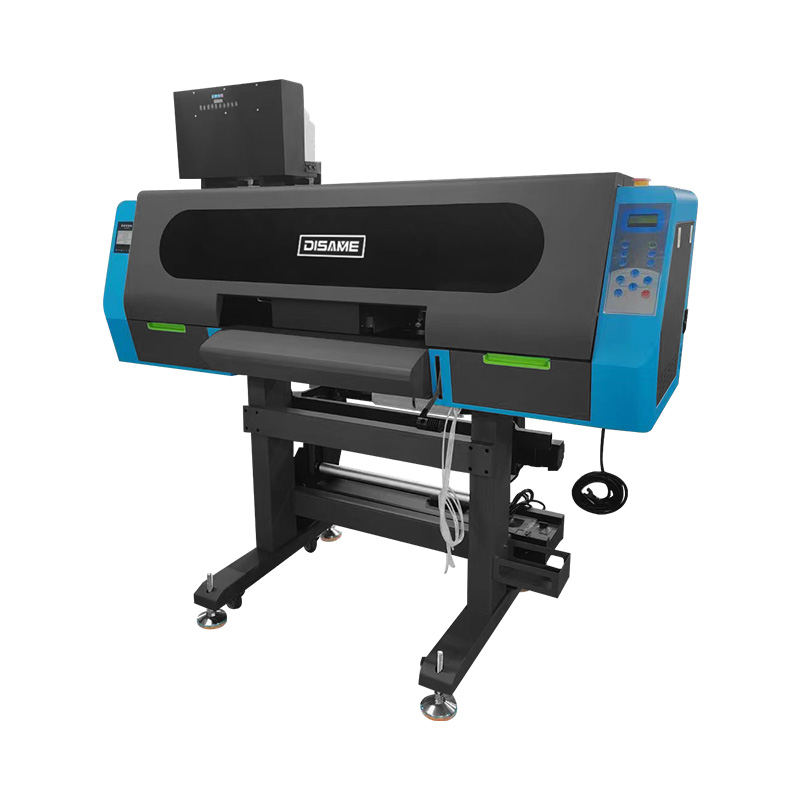
Calculating unit economics requires comparing two entirely different cost structures. Screen printing carries high fixed setup costs but incredibly low variable costs per print. You spend heavily on emulsion, chemicals, screen wear, and labor before printing, but the actual plastisol ink costs pennies per shirt. DTF printing carries zero setup costs but has a higher, flat variable cost per print based on the square footage of PET film, digital ink, and adhesive powder used.
The exact volume crossover point typically lands between 50 and 100 units, depending on the color count. For a one-color design, screen printing might become cheaper at 36 units. For a highly complex six-color design, DTF remains the more profitable choice up to 100 or even 150 units. Once you surpass this threshold, the fixed setup costs of screen printing are amortized enough that the low ink cost makes it the superior financial choice.
Reorder economics further separate the two methods. Screen printing is highly competitive for large, repeatable runs where the shop retains the burned screens. However, if a client wants to reorder just three shirts a month later, setting up the press again is a massive loss. DTF is vastly superior for sporadic, low-volume reorders. There are zero setup fees. The operator simply opens the digital file, hits print, and produces the exact quantity needed.
Production Metric | DTF Printing | Screen Printing |
|---|---|---|
Initial Setup Time | 2-5 minutes (Digital RIP) | 45-120 minutes (Darkroom & Press) |
Color Capacity | Unlimited (CMYK Photorealistic) | Limited by press heads (Typically 4-8) |
Ideal Volume | 1 to 100 units | 100 to 10,000+ units |
Variable Cost per Unit | Flat rate based on size | Decreases rapidly with volume |
Reorder Efficiency | Excellent for micro-runs | Poor for micro-runs, excellent for bulk |
DTF printing excels at reproducing fine details, complex gradients, and photorealistic images using digital CMYK printing. Screen printing can also produce high-quality graphics but requires halftone techniques and precise color separation for detailed designs. DTF is generally more convenient for intricate, multicolor artwork, while screen printing offers consistent results for simpler designs.
DTF and screen printing both offer good wash durability when properly produced and cured. DTF transfers create a flexible adhesive layer that withstands repeated washing, while screen printing provides different textures depending on the ink type. Water-based screen printing typically delivers a softer feel, whereas DTF has a slightly raised surface. Proper curing, heat pressing, and garment care help maintain print quality.
DTF printing simplifies production through digital artwork preparation, RIP software, and automated powder application and curing. Screen printing requires additional technical skills, including screen preparation, ink management, and press calibration. DTF can reduce setup labor for small-batch orders, while automated screen printing remains efficient for large-volume production.
DTF printing systems generally require less production space than traditional screen printing setups, making them suitable for smaller workshops. Screen printing requires additional areas for screen preparation, washing, and drying, while DTF needs suitable ventilation, powder handling, and fume extraction. Both methods must follow applicable workplace safety and environmental requirements.
Audit your historical order data over the last six months to determine your average order size, reorder frequency, and average color count.
Calculate your specific volume crossover point by comparing your current screen setup times and labor rates against the flat per-square-foot cost of digital consumables.
Request physical wash samples from equipment vendors and run them through 20+ harsh wash cycles in your own laundry facilities to verify durability.
Evaluate your production floor space to ensure adequate room for proper ventilation, fume extractors, and climate control systems before purchasing hardware.
A: When properly cured, DTF prints are highly durable and withstand 50+ wash cycles. The hot-melt polyurethane adhesive creates a flexible, mechanical bond with the fabric that resists cracking. While a well-executed plastisol screen print may last slightly longer over years of abuse, commercial-grade DTF meets all standard retail durability requirements.
A: The crossover point typically sits between 50 and 100 units. For a simple one-color design, screen printing becomes more cost-effective around 36 to 50 shirts. For a complex six-color design, DTF remains cheaper up to 100 or 150 units due to the heavy labor required to set up multiple screens.
A: Yes. Unlike DTG printing, which struggles with synthetic fibers, DTF works exceptionally well on 100% polyester. The adhesive powder creates a mechanical grip on the fabric surface, bypassing the dye migration issues that often plague standard screen printing and water-based DTG inks.
A: Cured DTF transfers can be stored indefinitely if kept in a climate-controlled environment. They should be stored flat or gently rolled in a dry area away from direct sunlight and extreme humidity to ensure the adhesive powder remains viable and the film does not warp.
A: No. While early DTF iterations felt heavy, modern hot-peel films and ultra-fine adhesive powders create a much softer, more flexible hand feel. It does not have the stiff, plastic texture of traditional heat transfer vinyl, though it is slightly heavier than a water-based screen print.
A: The white ink used in DTF contains heavy titanium dioxide pigments that settle quickly. If the ink is not circulated and agitated daily, these pigments will clog the microscopic nozzles in the printhead. Daily maintenance prevents permanent printhead failure and ensures consistent print quality.
A: Absolutely. Many shops use a hybrid workflow. They utilize their automatic screen presses for large, simple back designs, and use a heat press to apply DTF transfers for complex, multi-color left-chest logos or custom names and numbers on the same garment.


