Views: 0 Author: Site Editor Publish Time: 2026-09-21 Origin: Site
Equipment manufacturers frequently advertise maximum speeds of 1,200 stitches per minute. On the shop floor, that number means very little. A massive gap exists between a machine's theoretical speed limit and the actual number of finished garments you can box up at the end of a shift. Miscalculating your daily production capacity leads to underpricing orders, missing delivery deadlines, and buying the wrong tier of commercial equipment. These operational errors will quickly destroy your return on investment. You need a realistic framework to calculate true daily output. This guide breaks down the actual production capacity of commercial equipment based on real shop conditions. We factor in human operation, design complexity, garment type, and equipment scalability. You will learn how to measure your baseline, identify bottlenecks, and maximize your daily yield without burning out your operators or pushing your machines past their mechanical limits.
Baseline Output: A standard single-head commercial embroidery machine typically produces around 40 garments per 8-hour shift (based on a standard 4,000–6,000 stitch, 2"x3" left-chest logo).
The Human Bottleneck: Machine speed (SPM) accounts for only a fraction of production time; hooping, color changes, and thread breaks dictate actual yield.
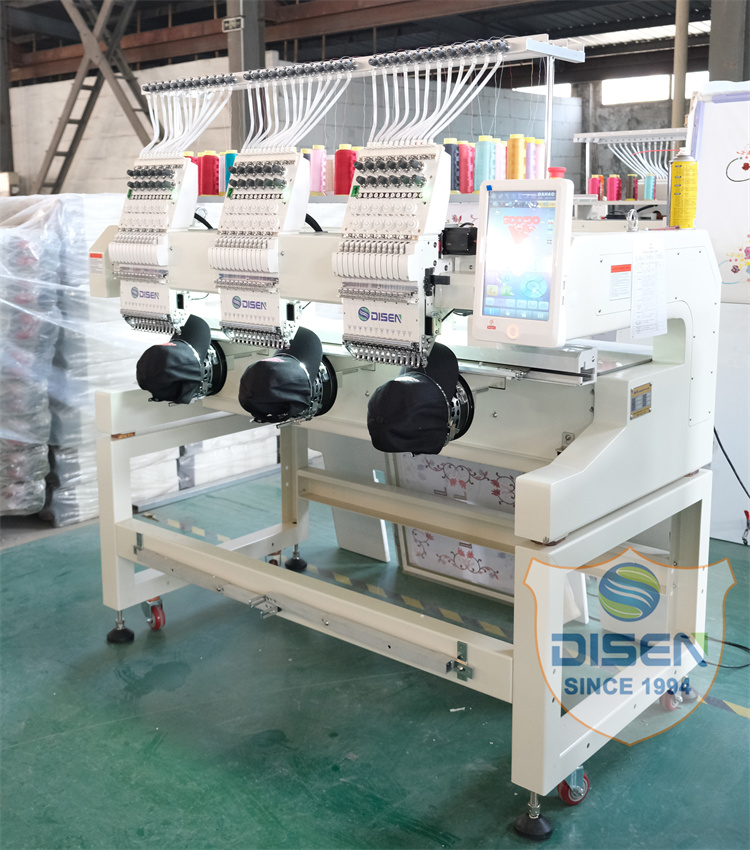
Scalability Thresholds: Moving from a single-head to a multi-head embroidery machine (e.g., a 6-head unit) shifts output from ~5 shirts an hour to 36+ shirts an hour, fundamentally altering the business model.
Pricing Strategy: Relying strictly on a "price per 1,000 stitches" model is flawed and loses money if it does not account for total run time, setup fees, and operator efficiency.
Table of Contents
Accurate production estimates require clear testing conditions. A standard benchmark usually uses an eight-hour shift, a common left-chest logo, and flat garments such as polo shirts. A typical design contains around 4,000–6,000 stitches. Using consistent conditions helps businesses better understand actual machine capacity and avoid unrealistic production expectations
A single-head embroidery machine can typically produce around 40 shirts per eight-hour shift under normal working conditions. Although the embroidery process may only take several minutes, the complete cycle also includes garment preparation, hooping, loading, trimming, and finishing. Operator experience, design complexity, and machine adjustments all affect the final daily output.
Small businesses and part-time operators usually have shorter production hours and additional tasks to manage. During a three- to four-hour working period, a realistic output is often around 15–20 garments. Proper preparation, organized workflow, and efficient hooping are important to maintain quality while increasing production speed.
The maximum machine speed represents ideal conditions and does not reflect real production. Actual output is affected by hooping time, thread changes, maintenance, operator actions, and design adjustments. Planning based on a realistic utilization rate helps businesses create accurate schedules and avoid production delays.
Specific machine features directly impact your final daily tally. A machine is only as fast as its supporting technology and the operator running it. We must evaluate how operational realities interact with equipment capabilities. High-end features reduce manual intervention and keep the needle moving. Missing features force the operator to stop the machine frequently. Understanding these dimensions helps you optimize your current setup. It also guides your purchasing decisions when expanding your shop floor.
Not all five-thousand stitch designs are created equal. Dense designs with heavy underlay stitches slow down the production cycle. Complex fills require the machine to work harder and often necessitate slower running speeds to prevent thread breaks. A simple text logo runs smoothly with minimal interruptions. A highly detailed crest with tiny lettering triggers frequent automatic trims. Each trim stops the machine, cuts the thread, and repositions the needle. These micro-stops add up over an eight-hour shift. Complex pathing drastically reduces your daily output compared to basic corporate text.
The type of garment you decorate heavily influences your daily yield. Flat garments like shirts and jackets hoop quickly and run efficiently. Tubular items or structured hats present a different challenge entirely. Cap frames require significantly more setup time. The operator must secure the backing, align the center seam, smooth the buckram, and clamp the frame tightly. Furthermore, hats require slower running speeds. The curved surface and rigid structure cause needle deflection at high speeds. You must reduce your machine speed to prevent thread breaks and needle damage.
Production Variable | Flat Garments (Polos/Jackets) | Structured Hats (Caps) |
|---|---|---|
Average Hooping Time | 30 - 45 seconds | 60 - 90 seconds |
Optimal Machine Speed | 750 - 850 SPM | 550 - 650 SPM |
Needle Deflection Risk | Low | High |
Estimated Hourly Yield | 5 - 6 items | 3 - 4 items |
Maximum machine speed does not always mean higher production output. Running at very high speeds increases friction, heat, and the risk of thread breaks. A stable operating speed often produces more finished garments by reducing downtime. Machines with more needles also improve efficiency by reducing manual thread changes, especially for complex multi-color designs.
Operator efficiency directly affects embroidery output. Poor hooping alignment or slow setup can keep the machine waiting and reduce daily production. Skilled operators can prepare garments faster and maintain consistent placement. Using tools such as magnetic hoops and organized workstations can further improve workflow and increase overall productivity.
Regular maintenance is essential for stable embroidery production. Thread breaks, bobbin changes, cleaning, and adjustments all reduce available production time. Ignoring routine maintenance may cause larger machine failures and longer downtime. Proper cleaning, lubrication, and scheduled inspections help maintain consistent output and extend machine life.
Buyers nearing their production ceiling must evaluate different equipment categories. You can scale your business through two primary approaches. You can add more single-head units to your shop. Alternatively, you can invest in a larger multi-head system. Each approach solves the capacity problem differently. The right choice depends entirely on your typical order profile. Understanding the mechanics of each category ensures you scale profitably. We will compare these approaches to help you make an informed decision regarding your shop's footprint and workflow.
The mathematical tipping point for upgrading depends on your order volume. If you consistently receive orders for fifty or more identical garments, a multi-head system makes sense. A four-head or six-head machine multiplies your output dramatically. A six-head machine can produce approximately thirty-six shirts per hour. It achieves this without multiplying your labor costs. One operator can manage a six-head machine efficiently. The labor required to hoop six shirts aligns perfectly with the machine's run time. This synergy maximizes operator efficiency and skyrockets your daily yield.
Networking a fleet of multiple single-head machines offers a different strategic advantage. This fleet model provides incredible redundancy. If one machine requires maintenance, the others continue producing. It also allows you to run simultaneous custom jobs. You can embroider a hat, a jacket, and a polo shirt all at the same time. This flexibility is perfect for shops handling highly variable, low-volume orders. Conversely, a large multi-head machine is optimized for high-volume, identical runs. If you primarily decorate large batches of corporate apparel, the multi-head system wins. Evaluate your typical order mix before choosing between redundancy and sheer volume.
Daily output connects directly to your profitability and equipment payback periods. Understanding this connection allows you to make smart financial decisions. Every minute your machine sits idle costs you money. Every finished garment contributes to your bottom line. You must analyze the factors that influence your overall value. This includes the cost of consumables, labor rates, and equipment depreciation. Mastering these calculations ensures your business remains profitable. It also helps you determine exactly when a new machine will pay for itself.
Calculating the true cost of producing one shirt requires a detailed framework. You cannot simply look at the cost of the blank garment. You must factor in machine depreciation over its expected lifespan. You must calculate the cost of thread, backing, bobbins, and needles used per run. Most importantly, you must include operator hourly wages. Divide the operator's hourly rate by the number of shirts produced in that hour. This gives you the true labor cost per shirt. Adding these variables together reveals your actual cost per run.
Cost Variable | Impact on Single-Head Production | Impact on Multi-Head Production |
|---|---|---|
Operator Labor | High (1 operator per 5-6 shirts/hr) | Low (1 operator per 36 shirts/hr) |
Machine Depreciation | Lower initial investment to recover | Higher initial investment, faster recovery at volume |
Consumables (Thread/Backing) | Scales linearly with output | Scales linearly with output |
Setup Time (Hooping/Digitizing) | Absorbed over fewer garments | Highly efficient, absorbed over large batches |
The traditional pricing model relies heavily on a flat rate per thousand stitches. This model is fundamentally flawed and often hurts profitability. It ignores the actual time the garment spends on the machine. A complex design with twelve color changes takes longer than a single-color design of the same stitch count. The stitch count rule also ignores hooping time and setup fees. Pricing based on your shop's hourly rate is a much safer approach. Calculate your desired hourly revenue. Factor in time-on-machine, setup fees, and material costs. This ensures every job you take actually generates a profit.
Calculating the break-even point for a new machine purchase requires realistic data. Do not base your calculations on best-case scenarios or theoretical maximums. Use the realistic daily output metrics we established earlier. Factor in your monthly overhead costs, including rent, utilities, and insurance. Add your labor costs and material expenses. Determine how many garments you must produce and sell daily to cover these costs. Any production beyond this break-even point represents your true profit margin. Understanding this math is critical before investing in commercial Embroidery Machines.
While a single-head machine can reliably produce 35 to 50 shirts daily, actual output remains a product of multiple factors. Operator skill, design optimization, garment type, and machine reliability all dictate your final yield. Buyers should choose single-head Embroidery Machines for custom, low-volume, or highly variable orders. Shortlist multi-head machines if your daily demand consistently exceeds 50 identical garments. To optimize your production immediately, follow these steps:
Audit your current average run times by timing a standard left-chest logo from hooping to trimming.
Request verified time-study data from equipment manufacturers during any future machine demos.
Reorganize your physical workspace to keep hoops, backing, and garments within one step of the operator.
Calculate your specific cost-per-run using time-on-machine rather than flat stitch-count pricing.
A: Yes. A single commercial machine can generate significant side-income. It can produce up to 40 items a day. Profitability depends entirely on your pricing model. You must account for your time, materials, and setup fees rather than just charging by stitch count.
A: It typically takes 7 to 10 minutes total per garment. This average includes hooping the item, running a standard 4,000 to 6,000 stitch design, unloading the machine, and trimming the backing.
A: Yes. Hats require specialized cap frames that take longer to hoop and align. Additionally, the curved, structured surface of a hat forces operators to run the machine at slightly lower speeds to prevent needle deflection and thread breaks.
A: While industrial machines are highly durable, running them 24/7 without pauses is not recommended. Continuous operation generates excessive heat and wear. You must schedule operator shifts and mandate daily maintenance periods for oiling and cleaning to prevent catastrophic failure.
A: Running at 700 to 800 SPM is often more productive than pushing for 1,200 SPM. Moderate speeds reduce friction, prevent thread tension issues, and drastically lower the number of thread breaks, resulting in higher overall daily output.
A: The top running speed is not higher, but the overall production time is faster. A 15-needle machine experiences less downtime because it requires fewer manual thread color changeovers during complex, multi-color designs.
A: A 6-head machine can produce approximately 36 shirts per hour. This benchmark assumes a standard left-chest logo and relies heavily on the operator's ability to hoop the next batch of six garments while the machine is running.