Views: 0 Author: Site Editor Publish Time: 2026-09-21 Origin: Site
The custom apparel and promotional products market offers high profit margins and steady demand. Yet, undercapitalization remains the primary reason new custom apparel shops fail. Buyers often focus entirely on the initial hardware purchase. They underestimate the hidden operational expenses that quickly follow. Software licenses, routine maintenance, specialized stabilizers, and customer acquisition strategies represent major financial commitments. These extend far beyond the showroom floor.
To build a sustainable operation, you must accurately forecast your initial investment and time-to-profitability. We provide a transparent, line-by-line breakdown of startup requirements. This evaluates everything from commercial equipment to daily operational overhead. Understanding the true financial scope helps you allocate capital efficiently. You avoid crippling hidden fees and establish a clear path to long-term profitability.
Primary Expense: Commercial-grade embroidery machines represent 60-70% of initial startup costs, with reliable single-head units starting between $7,000 and $15,000.
Hidden Operational Costs: Digitizing software, specialized hoops, high-quality thread inventory, workflow automation, and routine maintenance contracts can add $2,000 to $5,000 to year-one expenses.
Scalability Trade-offs: Purchasing prosumer equipment limits production speed and material versatility, directly impacting the break-even timeline and maximum daily revenue.
ROI Timeline: With proper pricing strategies, a defined niche, and effective marketing, a well-capitalized single-head operation typically reaches the break-even point within 8 to 14 months.
Table of Contents
Selecting the right hardware dictates your production capacity and product versatility. The evaluation process centers on specific mechanical criteria. You need to look at sustained stitch speed, maximum embroidery field size, needle count, and mechanical reliability. Anticipated order volume drives this decision. Buying equipment that cannot handle your daily production requirements creates immediate bottlenecks. Over-investing in excess capacity drains your working capital.
The market segments heavily between prosumer models and true commercial units. Prosumer models often feature plastic internal gears, slower maximum stitch speeds, and restricted hoop sizes. These limitations impact your ability to process bulk orders. Prosumer units also lack the structural clearance required to embroider bulky items like structured caps or heavy winter jackets. You simply cannot fit a thick Carhartt jacket under the needle of a flatbed prosumer machine.
Commercial Embroidery Machines are engineered for continuous, daily operation. Baseline requirements for a commercial unit include a tubular arm design. This allows for seamless cap and bag embroidery. You also want a configuration of twelve to fifteen needles. More needles mean less thread changeover time. If you run a six-needle machine, you will constantly stop production to swap thread cones. A fifteen-needle machine lets you keep your core colors loaded permanently. All-metal internal construction ensures long-term durability. The initial capital outlay for commercial equipment is higher, but the investment yields faster production times and lower maintenance frequency.
Feature | Prosumer Models | Commercial Models |
|---|---|---|
Construction | Plastic casing, nylon gears | Cast iron/steel frame, metal gears |
Needle Count | 1 to 10 needles | 12 to 15 needles |
Arm Design | Flatbed (limited clearance) | Tubular (high clearance for hats/bags) |
Run Time | Light duty (few hours a day) | Heavy duty (24/7 capable) |
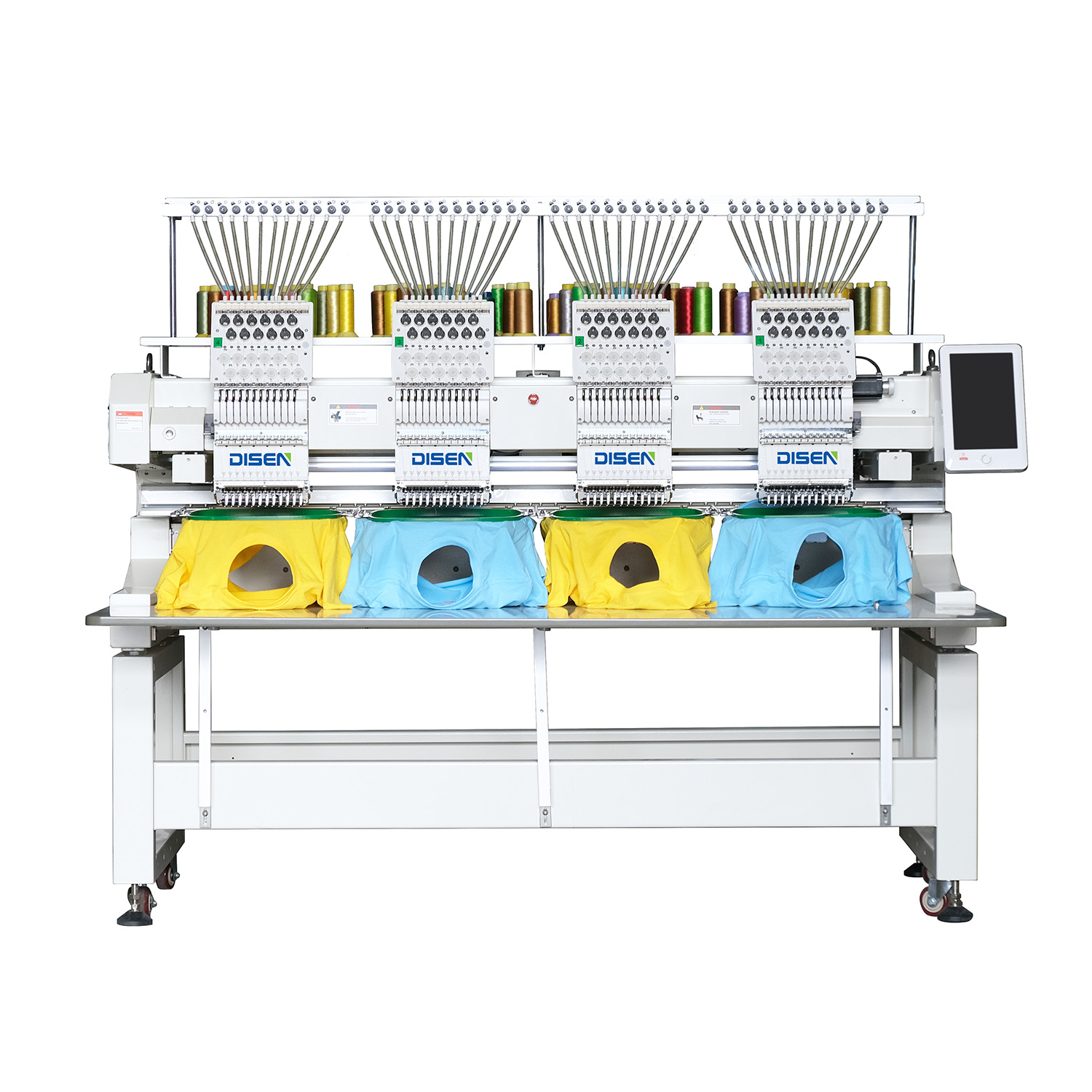
Understanding the cost-to-output ratio helps you structure your production floor. A single-head unit is the standard entry point. It offers flexibility for custom, one-off designs and small batch orders. As order volumes grow, you must decide how to scale. Investing in a multi-head configuration multiplies output without requiring additional operators. A four-head unit produces four identical garments in the exact time it takes a single-head unit to produce one.
Scaling by purchasing multiple single-head units offers operational redundancy. If a multi-head unit requires maintenance, all production on that machine halts. If one single-head unit in a fleet of four goes down, the other three continue generating revenue. You must weigh the efficiency of multi-head bulk production against the flexibility and risk mitigation of a single-head fleet. Many successful shops run a hybrid model: a multi-head for large corporate runs and a single-head for personalized names and samples.
Commercial hardware follows a distinct depreciation curve. Used equipment looks attractive for bootstrapped startups. However, purchasing pre-owned hardware introduces implementation risks. Used units often lack original equipment manufacturer warranties. You become responsible for all immediate repair costs. Older machines may feature outdated control panels. These panels might not read modern USB drives or connect to current networking protocols.
To mitigate these risks, enforce strict verification protocols. Require a comprehensive stitch-out test on various materials. Test structured caps and heavy canvas before finalizing a purchase. Verify the total stitch count in the machine's internal computer to gauge overall mechanical wear. Confirm the availability of local, certified technicians capable of servicing that specific brand and model year. Buying a cheap used machine is a bad deal if the nearest technician is three states away.
Preserving liquid capital keeps your doors open during the first year. Equipment financing or leasing provides cash-flow benefits compared to outright purchasing. Spreading the capital expenditure over a multi-year term lets you retain funds for marketing, inventory, and facility upgrades. Leasing structures often allow for equipment upgrades at the end of the term. This keeps your shop technologically competitive.
Review interest rates, term lengths, and buyout clauses carefully. The monthly equipment payment becomes a fixed overhead expense. It directly impacts your bottom line. Accurate financial modeling ensures that conservative monthly revenue projections comfortably cover the financing obligations alongside all other operational costs.
Hardware cannot generate revenue on its own. It requires specialized software to translate client artwork into mechanical movements. The digital infrastructure of an apparel business encompasses design conversion, order management, and workflow automation. You cannot ignore the digital side of the business.
Digitizing software converts artwork into embroidery stitch files that machines can read, such as DST or PES formats. Professional software allows control over stitch types, density, and underlay settings to improve embroidery quality. However, learning the software requires time and training. Poor digitizing can cause thread breaks, fabric puckering, and alignment issues.
Outsourcing digitizing is a practical option for new businesses that want to reduce upfront costs. Professional digitizers can provide ready-to-use stitch files without investing in expensive software. However, as order volume grows, handling digitizing in-house can improve control, reduce waiting time, and lower long-term production costs.
Order management software helps embroidery businesses organize daily operations and reduce manual work. It can manage quotes, invoices, artwork approvals, and production tracking in one system. Automating these processes improves workflow efficiency, reduces mistakes, and helps shops handle more orders as they grow.
Continuous production requires a steady supply of specialized consumables and raw materials. The initial stocking of these items represents a significant startup expense. Managing this inventory efficiently maintains cash flow and ensures rapid order turnaround.
Building a comprehensive thread color library is mandatory. You have to match specific client brand guidelines. You must choose between polyester thread and rayon thread. Polyester offers high tensile strength and bleach resistance. It is the industry standard for corporate wear and uniforms. Rayon provides superior sheen and softness but breaks more easily at high speeds. Alongside top thread, you require a bulk supply of pre-wound bobbins. Winding your own bobbins wastes valuable production time. Magnetic core bobbins offer consistent tension from the first stitch to the last.
Stabilizers, or backings, form the foundation of quality embroidery. A professional shop stocks various weights. You need cut-away stabilizers for stretchy knit fabrics like polos. You need tear-away stabilizers for stable woven garments and hats. Wash-away topping films keep stitches from sinking into textured fabrics like fleece or towels. Temporary adhesive sprays hold appliques in place. This consumable inventory must be replenished constantly.
The stock hoops included with a new machine rarely handle a diverse product catalog. Traditional tension hoops cause "hoop burn" on delicate fabrics. They require significant physical effort to frame thick garments. Upgrading to aftermarket magnetic framing systems reduces framing time. Magnetic hoops minimize fabric damage and improve overall registration. They save your wrists from repetitive strain injuries.
Specialized cap framing systems execute complex designs on structured headwear. Different cap profiles require different frame curvatures. A low-profile dad hat frames differently than a high-crown structured trucker hat. Investing in a comprehensive suite of magnetic hoops and specialized cap frames represents a premium upfront cost. It pays immediate dividends through reduced labor time and lower defect rates.
Securing high-quality blank garments at competitive wholesale rates requires establishing accounts with major apparel distributors. Distributors enforce minimum order quantities to access their lowest pricing tiers. You must allocate capital to meet these thresholds for popular items like polo shirts, unstructured caps, and corporate outerwear.
You face a strategic choice between carrying deep in-house inventory or utilizing just-in-time ordering. Carrying inventory ensures immediate production readiness but ties up vital cash. Just-in-time ordering preserves liquid capital. However, it leaves the shop vulnerable to distributor stockouts and shipping delays. A delayed box of blank shirts jeopardizes your client deadlines.
For shops incorporating an e-commerce or direct-to-consumer model, fulfillment infrastructure is mandatory. The hidden costs of shipping accumulate quickly. Operations require a steady supply of durable poly mailers and corrugated boxes for structured hats. You need custom branding materials like woven tags or inserts. Thermal shipping labels and a dedicated label printer speed up fulfillment. Establishing a streamlined packing station ensures products reach clients in pristine condition. This reinforces the premium nature of your custom apparel.
Running a legitimate commercial enterprise requires funding administrative, legal, and promotional frameworks. Neglecting these areas leaves the business legally vulnerable and practically invisible to potential clients.
Commercial sewing equipment requires rigorous preventative maintenance. Operators handle daily oiling and tension adjustments. You must oil the rotary hook every four hours of continuous run time. Professional servicing is required periodically to calibrate timing, replace worn rotary hooks, and inspect internal drive belts. Budgeting for professional maintenance visits prevents catastrophic mechanical failures.
You must account for the hidden cost of machine downtime. Every hour a machine sits idle awaiting a replacement part is an hour of lost revenue. Maintaining a small inventory of critical replacement parts on-site ensures continuous production. Keep spare bobbin cases, rotary hooks, and needle bar reciprocators in your toolbox.
Commercial equipment demands a suitable physical environment. These machines possess large physical footprints. They generate significant weight and vibration. Standard residential flooring may require reinforcement. Commercial units often require dedicated electrical circuits. Running a multi-head machine on a shared breaker causes power fluctuations that damage sensitive internal computers.
Climate control is another workspace expense. Thread and stabilizers degrade rapidly in environments with high humidity or extreme temperature fluctuations. Brittle thread snaps constantly during production. Maintaining a climate-controlled workspace preserves consumable inventory and ensures consistent thread tension.
Establishing a formal legal entity protects personal assets. It is required to open wholesale accounts with major apparel distributors. The costs associated with LLC formation, securing local operating permits, and registering for state tax IDs must be factored into the initial budget.
Specialized commercial insurance protects your investment. Standard property insurance rarely covers specialized manufacturing equipment adequately. You must secure inland marine policies or specific equipment coverage. These policies cover the replacement value of the hardware, liability for client property left on-site, and potential business interruption scenarios.
The most advanced production floor is useless without a steady stream of incoming orders. You must allocate a dedicated budget to build a loyal customer base. This includes expenses for professional website hosting, high-quality product photography, and marketplace listing fees.
Local search engine optimization and targeted digital advertising capture regional corporate accounts and local organizations. A realistic marketing budget ensures the brand gains traction quickly. You cannot rely solely on word-of-mouth in the first six months. You have to actively prospect for local businesses, schools, and sports leagues.
Startup costs vary based on your vision, available capital, and target market. Examining distinct launch scenarios clarifies how operational choices impact the total required investment.
This model maximizes capital preservation. It utilizes a spare room or residential garage as the production facility. The operation centers around a single-head commercial machine. It prioritizes quality over sheer volume.
Expense Category | Implementation Strategy |
|---|---|
Hardware | Single-head commercial unit (financed or purchased outright). |
Software | Outsourced digitizing on a per-design basis to avoid software costs. |
Workspace | Home-based; minimal electrical upgrades; zero additional rent. |
Marketing | Organic social media, local networking, and word-of-mouth. |
Inventory | Just-in-time blank ordering; basic thread and stabilizer library. |
This bootstrapped approach keeps overhead exceptionally low. You reach profitability quickly. However, you face a capped maximum daily output due to the single-head limitation and manual administrative processes.
This model is built for immediate scale and high-volume order processing. It requires a leased commercial or industrial space. It targets large corporate accounts, school districts, and regional brands.
Expense Category | Implementation Strategy |
|---|---|
Hardware | Multi-head configuration (4 to 6 heads) for rapid bulk production. |
Software | In-house perpetual digitizing software; automated shop management platform. |
Workspace | Leased commercial facility; dedicated electrical drops; climate control. |
Marketing | Aggressive local SEO, paid digital ads, and direct outbound sales. |
Inventory | Deep stock of popular blanks; comprehensive magnetic hoop systems. |
The capital requirement for a commercial retail launch is substantial. The infrastructure supports rapid revenue scaling, faster turnaround times on bulk orders, and higher overall profit ceilings.
Understanding the precise mechanics of profitability separates successful businesses from expensive hobbies. You must master your internal metrics to price accurately and forecast returns.
Profitability begins with knowing the exact cost of production. The industry standard metric is the cost per stitch. This calculation includes the fractional cost of the thread used, the square footage of the backing consumed, the estimated wear and tear on the machine per thousand stitches, and the labor time required for framing, trimming, and packing. Only by understanding the true cost per stitch can you generate accurate, profitable quotes. If you guess your costs, you will lose money on large runs.
The break-even point is achieved when total gross profit covers the initial equipment and startup expenditures. Calculate this by dividing the total startup investment by the average net profit per completed garment. This metric dictates how many items must be sold before the business becomes truly profitable.
A trap for new operators is competing solely on price. Racing to the bottom destroys margins and attracts difficult clientele. Successful shops utilize value-based pricing. Charge a premium for exceptional stitch quality, rapid turnaround times, superior customer service, and expert garment sourcing. Clients will pay more for a shop that delivers on time, every time.
Operators who invest in professional digitizing software and master the skill can create lucrative secondary revenue streams. By designing and digitizing custom artwork, fonts, or template files, you can sell these digital assets online to other apparel decorators. Selling digital products requires zero physical inventory. It incurs no shipping costs. It offers near-perfect profit margins and accelerates the overall return on the initial software investment.
Launching a custom apparel operation requires a clear understanding of the financial landscape. The barrier to entry is high due to the heavy capital requirements of commercial equipment. The industry's robust profit margins justify the investment if you allocate capital wisely. Prioritize reliable, commercial-grade hardware and proactive customer acquisition over cheap, restrictive alternatives that throttle growth. When shortlisting equipment, look beyond minor feature differences. Prioritize machines built with all-metal construction, backed by comprehensive warranties, and supported by accessible local technicians.
Request physical sample stitch-outs from multiple equipment distributors to verify machine quality on heavy materials like canvas and structured caps.
Secure financing pre-approvals to establish a firm budget and understand your true purchasing power before speaking with sales representatives.
Test various outsourced digitizing services with complex artwork to identify a reliable partner for your initial launch phase.
Implement a basic shop management software platform to organize your quoting and invoicing workflows before the machinery arrives.
A: Entry-level, single-head commercial machines require a significant initial investment, generally representing the largest single capital outlay for a startup. Multi-head configurations designed for high-volume production demand a substantially higher premium. Exact costs fluctuate based on needle count, included accessories, and warranty terms.
A: While technically possible, single-needle machines are highly inefficient for commercial work. They require the operator to manually stop the machine and re-thread it for every single color change in a design. This manual labor destroys production speed and severely limits daily revenue potential.
A: The commercial hardware itself is always the most expensive component, typically accounting for the vast majority of initial startup capital. Facility leasing, professional digitizing software, and the initial stocking of wholesale blank garments also represent major financial commitments.
A: Professional digitizing platforms require either a substantial one-time payment for a perpetual license or an ongoing monthly subscription fee. The investment varies based on the software's capabilities, with advanced auto-digitizing and complex stitch generation features commanding premium pricing.
A: Hidden costs include routine preventative maintenance, replacement parts like rotary hooks, specialized aftermarket magnetic hoops, dedicated electrical circuit installations, and the inevitable material waste generated during operator training and machine calibration.
A: New machines provide reliable OEM warranties, modern networking capabilities, and zero wear, ensuring maximum uptime. Used machines preserve initial capital but carry significant risks regarding unknown mechanical wear, lack of warranty support, and potential obsolescence of internal computer panels.