
Views: 0 Author: Site Editor Publish Time: 2025-12-09 Origin: Site
In 2025, computerized embroidery machines have become indispensable tools for both industrial manufacturers and creative hobbyists. These advanced machines automate the intricate art of embroidery by precisely stitching digital designs onto fabric with speed, consistency, and high fidelity. Widely used in fashion, home textiles, sportswear, promotional merchandise, automotive interiors, and even medical textiles, embroidery machines significantly enhance production efficiency while enabling limitless customization. Their key advantages include high-speed operation (up to 1,500 stitches per minute), multi-color automatic thread changes, low error rates, and compatibility with various fabric types—from delicate silk to heavy denim.
As the market expands globally, choosing the right embroidery machine requires understanding both technology and brand reliability. Below are five top-tier brands that stand out in 2025 for their innovation, performance, and customer support.
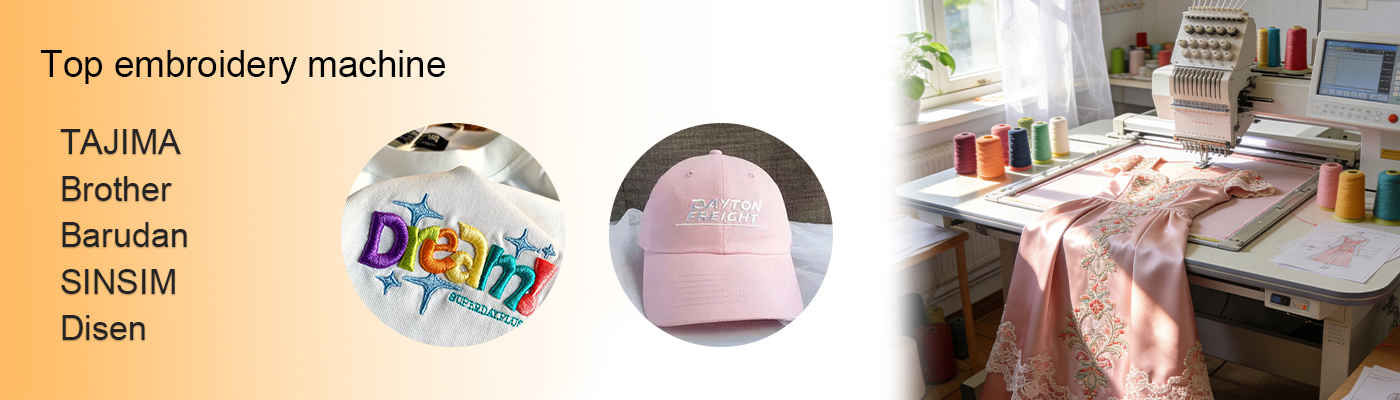
Founded in 1943 and headquartered in Japan, TAJIMA is widely regarded as the pioneer of industrial multi-head embroidery machines. The company introduced the world’s first computerized embroidery system in the 1960s and continues to lead in precision engineering. TAJIMA machines—such as the TMLE Series—are known for exceptional durability, ultra-quiet operation, and intelligent features like real-time monitoring and predictive maintenance. Ideal for large-scale exporters and high-end apparel brands, TAJIMA combines decades of craftsmanship with cutting-edge automation.
Brother offers a versatile range from compact single-head models for small businesses to semi-industrial units like the PR1055X. Renowned for user-friendly interfaces and seamless integration with its PE-Design software, Brother excels in accessibility without compromising quality. Its machines support USB, Wi-Fi, and cloud-based design transfers, making them perfect for startups, boutique studios, and educational institutions seeking reliable, cost-effective solutions.
With over 70 years of experience, Barudan has built a global reputation for robust, high-speed embroidery systems. Models like the BEK-1200 series feature advanced tension control, automatic thread trimmers, and intuitive touchscreens. Barudan emphasizes operator safety and uptime, backed by an extensive international service network. Trusted by major sportswear and uniform manufacturers, Barudan delivers consistent results even under 24/7 production demands.
Established in 2002, SINSIM (Zhejiang Xinsheng Technology) has rapidly grown into a global player, exporting to more than 90 countries. The brand specializes in fully customizable machines—from single-head flat embroidery units to 300-head behemoths equipped with sequin, bead, chenille, and laser-cutting modules. SINSIM machines run on Dahao or Mate control systems, offer speeds up to 1,500 RPM, and come with lifetime technical support in markets like Bangladesh. Their focus on modular design and after-sales training makes them a favorite among RMG (Ready-Made Garment) factories.
Guangzhou Disen Machinery, founded in 1994, provides comprehensive textile equipment including embroidery, printing, and sewing machines. DISEN’s embroidery lineup—such as the DS-J1206 multi-head model—supports flat, cap, and tubular embroidery with DAHAO control systems and 13-language interfaces. Known for OEM/ODM flexibility and one-stop service, DISEN serves clients in over 190 countries, emphasizing ease of operation, low thread breakage, and strong local support.
These five brands are recommended not only for their technological excellence but also for their commitment to reliability, scalability, and customer empowerment. When selecting an embroidery machine in 2025, consider the following factors:
Application needs: Cap, flat, towel, or specialty embroidery
Head count and needle configuration: Single-head for sampling vs. multi-head for mass production.
Speed and stitch quality: Balance RPM with precision—higher speed shouldn’t compromise detail.
Software compatibility: Ensure easy design import (DST, PES, etc.) and editing capabilities.
After-sales support: Local service centers, training, and spare parts availability are critical for minimizing downtime.
Ultimately, whether you’re launching a custom apparel business or scaling a textile factory, investing in a machine from a proven brand ensures long-term productivity, creative freedom, and competitive advantage in today’s fast-evolving embroidery industry.


