
Views: 0 Author: Site Editor Publish Time: 2026-03-12 Origin: Site
In the apparel industry, branding details play an important role in product identity and perceived quality. Logos on hoodies, caps, jackets, and pants are no longer limited to traditional embroidery or screen printing. In recent years, UV printing technology—especially when combined with UV DTF processes—has opened a new way to produce high-quality 3D labels for clothing and fashion accessories. As a UV DTF printer supplier, we have seen many apparel manufacturers adopt this technology to create raised, durable logos that enhance the visual value of their products.
This article explains how UV printing is used in the 3D label manufacturing process for garments.
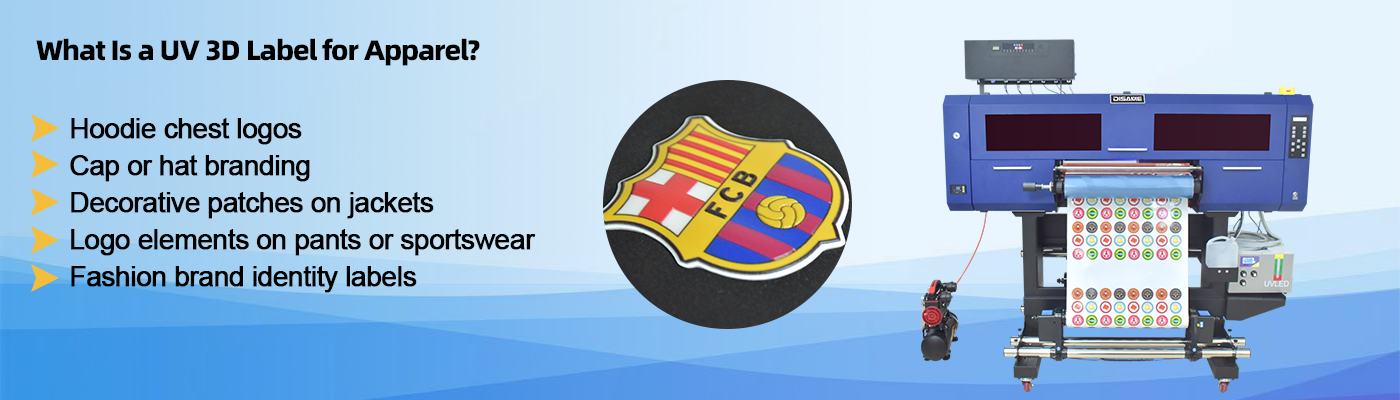
A UV 3D label is a raised logo or graphic created by stacking multiple layers of UV ink. Instead of printing a flat image, the printer deposits ink layer by layer, curing each layer instantly with UV light. As the layers accumulate, the graphic gradually builds height and forms a tactile three-dimensional structure.
For clothing applications, the raised height is typically 0.3 mm to 1 mm, which creates a noticeable embossed effect without making the label too rigid. Once produced, the label can be transferred and applied onto textiles such as cotton, polyester, or blended fabrics.
This type of label is commonly used for:
Hoodie chest logos
Cap or hat branding
Decorative patches on jackets
Logo elements on pants or sportswear
Fashion brand identity labels
Because the logo has both visual depth and a textured surface, it gives garments a more premium and modern appearance.
The process starts with graphic design using software such as Adobe Illustrator, CorelDRAW, or Photoshop. During this stage, the areas that require a raised effect—such as brand logos or symbols—are separated into dedicated layers.
For best results:
Text and lines should not be too thin.
Vector outlines should be clean and smooth.
Different heights can be created by adjusting layer settings in the RIP software.
Careful design preparation helps ensure the final label has clean edges and a strong 3D structure.
After the design is prepared, the file is processed through RIP software and sent to the UV printer. The printer then begins the layered printing process.
The typical steps include:
White ink base printing to build the height of the design.
Repeated ink stacking, where multiple layers are printed in the same area.
UV curing after each layer, allowing the ink to harden immediately and support the next layer.
Depending on the desired height:
A 0.3–0.5 mm raised label may require around 10–20 layers.
A 0.8–1 mm raised effect may require 30–50 layers.
Professional workflows usually rely on many thin layers rather than a few thick ones. This approach improves edge quality and prevents ink collapse.
For apparel applications, the UV-printed graphic is usually produced on a special transfer film rather than directly on fabric. After printing and curing are complete, the finished graphic becomes a flexible 3D label.
This label can then be transferred onto garments using a heat press machine. The transfer process ensures strong adhesion to fabrics while maintaining the raised texture of the design.
Once applied, the label becomes part of the garment surface and can withstand normal wear and washing when properly produced.
To further enhance the appearance of the label, additional finishing layers may be applied.
Common finishing options include:
Gloss coating, which creates a shiny, crystal-like effect often used in fashion logos.
Matte coating, which produces a more subtle and premium look.
Selective varnish, where certain parts of the logo are highlighted for extra visual contrast.
These finishing options allow clothing brands to customize the style of their labels and create distinctive product details.
Compared with traditional logo techniques such as embroidery or screen printing, UV 3D labels offer several advantages for clothing manufacturers:
No embroidery setup or molds required
Highly detailed logo reproduction
Flexible production for small batches or custom designs
Strong color saturation and modern 3D appearance
Fast production and easy design changes
These advantages make UV 3D labels especially attractive for fashion brands, streetwear labels, and custom apparel producers.
UV printing technology provides an innovative and efficient way to produce 3D labels for clothing and accessories. By stacking layers of UV ink and curing them instantly, manufacturers can create raised logos with excellent detail and durability. When combined with transfer film and heat press application, these labels can be easily applied to garments such as hoodies, hats, and pants.
For apparel brands seeking distinctive product branding and modern decorative elements, UV DTF printing technology offers a versatile and scalable solution for high-quality 3D label manufacturing.


